
Main Courses
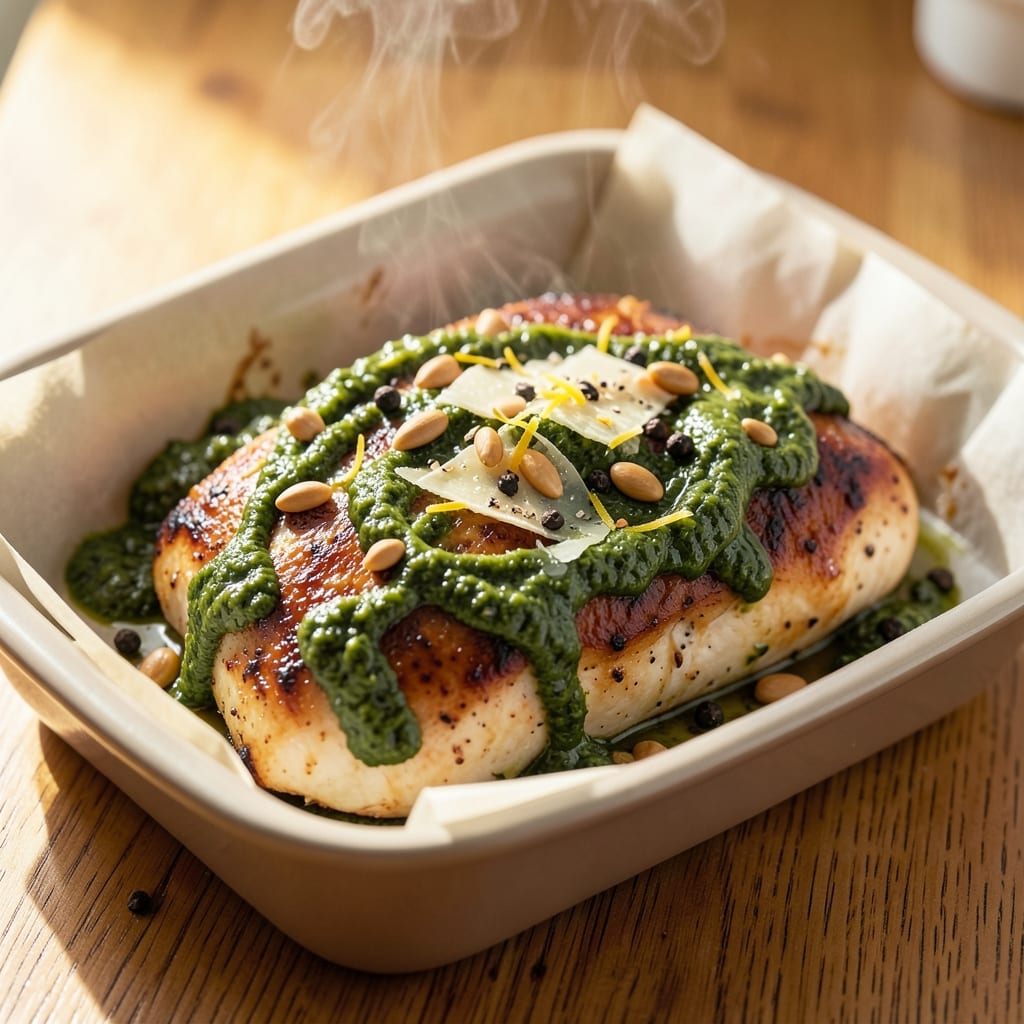
This baked basil pesto chicken delivers crispy golden skin and juicy tender meat in one foolproof oven bake. I developed this recipe after years of perfecting herb-infused chicken that stays moist while achieving that coveted restaurant-quality crust—no frying required. The secret lies in a homemade basil pesto baked directly onto the chicken, creating a flavorful crust that seals in juices while infusing the meat with aromatic herbs.
The process is simpler than it sounds: marinate the chicken, spread the pesto, and bake until the skin is perfectly crispy and the internal temperature reaches 165°F. What makes this recipe stand out is how the pesto transforms from a simple sauce into a flavorful crust during baking, eliminating the need for separate sides to soak up extra sauce. The result? A dish that's elegant enough for dinner parties but easy enough for weeknight dinners.
By the time you pull this chicken from the oven, you'll have a golden, herb-infused masterpiece with crispy edges that give way to tender, juicy meat. The basil pesto isn't just a topping—it's the star, adding layers of fresh, aromatic flavor to every bite. This recipe serves four, making it perfect for family dinners or impressing guests without spending hours in the kitchen.
The best part? Leftovers reheat beautifully, and the pesto crust stays intact, making this an ideal meal prep option. Serve with a simple arugula salad or roasted vegetables to complete the meal. Here's how to make it perfectly every time.
Ingredients for baked basil pesto chicken
Fourteen ingredients transform simple chicken into restaurant-quality herb-infused perfection.
| Ingredient | Amount | Notes |
|---|---|---|
| Boneless, Skin-On Chicken Breasts 🍗 | 1 ½ lb | Even thickness, pounded to 0.5-inch |
| Fresh Basil Leaves 🌿 | 2 cups | Packed, stems removed, tightly packed |
| Pine Nuts 🥜 | ½ cup | Toasted lightly for nutty depth |
| Garlic Cloves 🧄 | 4 cloves | Peeled, roughly chopped |
| Parmesan Cheese 🧀 | ¾ cup | Freshly grated from block |
| Extra-Virgin Olive Oil 🫒 | ¾ cup | Light, fruity variety preferred |
| Lemon Juice 🍋 | 2 tbsp | Freshly squeezed, strained |
| Kosher Salt 🧂 | 1 ½ tsp | Diamond Crystal preferred |
| Freshly Ground Black Pepper 🌶️ | ½ tsp | Coarse grind for texture |
| All-Purpose Flour 🌾 | 2 tbsp | For light dusting |
| Butter 🧈 | 2 tbsp | Unsalted, softened |
| Olive Oil 🫒 | 1 tbsp | For brushing chicken |
| Fresh Thyme Leaves 🌿 | ¼ cup | Chopped, for marinade |
| Dried Oregano 🍃 | ½ tsp | Mediterranean blend preferred |
The chicken breasts are non-negotiable—look for even thickness at Whole Foods or your butcher's counter. Trader Joe's often carries pre-pounded cuts, saving you time. Pounding to 0.5-inch thickness ensures even cooking. Fresh basil is worth the splurge: local farmers markets have the brightest leaves, but grocery store bunches work if they're vibrant green. Pine nuts toast in 3 minutes—don't burn them or they'll taste bitter. The Parmesan should be Parmigiano-Reggiano from a block, not pre-grated. For the olive oil, California Extra Virgin brands like Corto or Otto add fruity brightness without overpowering.
No fresh basil? Dried oregano at half the amount works in a pinch, though texture suffers. Substitute walnuts for pine nuts—they're cheaper and add earthy depth. The lemon juice can be bottled if fresh isn't available, but Meyer lemons have that perfect sweet-tart balance. For the marinade, substitute balsamic vinegar for lemon juice if you're out, though flavor shifts slightly. The butter should be unsalted—adding salt later gives you control. If you're avoiding gluten, skip the flour dusting and use cornstarch instead. The thyme can be dried at one-third the amount, but fresh is ideal for that bright aroma.
Chicken marinates best overnight, but even 30 minutes works in a pinch. Store the pesto ingredients separately until ready to blend—basil wilts fast, so keep stems out. The pesto keeps for 5 days in the fridge, covered with olive oil. Chicken reheats beautifully—350°F for 10 minutes restores crispiness. For meal prep, bake an extra breast and portion the pesto separately. The crust stays intact for 3 days refrigerated, though texture softens slightly. Freeze pesto in ice cube trays for single-use portions—thaw at room temperature before using.
Why You'll Love This Recipe
- One-Pan Magic: I swear by this recipe when I’m too tired to scrub pots—just toss the chicken, pesto, and garlic on a sheet pan, and let the oven do the work. That crispy skin? Zero effort, all flavor.
- Herb-Packed Punch: The basil and pine nuts give this dish a bright, nutty kick that feels fancy but takes minutes to mix. Honestly, the first bite makes me question why I ever bought jarred pesto.
- Lunchbox Hero: Between us, this is my go-to for meal prep—slices just as well cold as hot, and the pesto stays vibrant for days. My kids actually eat their greens when it’s hidden in this.
- Budget-Friendly Crisp: Skin-on chicken stretches further, and a handful of basil goes a long way. I’ll be real: the Parmesan and pine nuts feel indulgent, but the cost adds up fast when you’re feeding a crowd.
Step-by-step instructions for herb-infused baked chicken
Here's how to achieve perfectly crispy skin with juicy, herb-infused chicken every time.
Prepare the Basil Pesto Marinade
In a food processor, combine the 2 cups fresh basil leaves, 0.5 cup pine nuts, 4 cloves garlic, 0.75 cup Parmesan cheese, 0.75 cup extra-virgin olive oil, 2 tbsp lemon juice, 0.25 cup fresh thyme leaves, 0.5 tsp dried oregano, 1.5 tsp kosher salt, and 0.5 tsp black pepper. Pulse until the mixture reaches a thick, creamy consistency—about 30 seconds of processing.
Here's the thing—don't over-process or the pesto will turn into a paste. You want it chunky enough to carry those herb flavors. Taste and adjust seasoning if needed, then transfer the pesto to a bowl. This marinade is the secret to both flavor and moisture retention during baking.
Coat and Rest the Chicken
Place the 1.5 lb boneless, skin-on chicken breasts on a plate and spread the pesto evenly over both sides, including the skin. Press the pesto gently into the meat so it adheres well. Let the chicken rest uncovered in the refrigerator for at least 1 hour—this allows the marinade to penetrate deeply.
I know it seems like a long wait, but trust me on this. The resting period ensures the chicken cooks evenly and develops maximum flavor. While it marinates, preheat your oven to 400°F for the perfect baking temperature that creates crispy skin without drying out the meat.
Create the Crispy Skin Foundation
Remove the chicken from the fridge and let it sit at room temperature for 10 minutes before baking. This prevents cold spots that could prevent proper browning. Pat the skin completely dry with paper towels—this is critical for achieving crispy skin. Any moisture left on the skin will steam instead of crisp.
Lightly dust both sides of the chicken with 2 tbsp all-purpose flour, shaking off any excess. This creates a thin barrier that helps the skin crisp beautifully. Brush the skin generously with 1 tbsp olive oil, then place the chicken on a wire rack set over a baking sheet. The rack allows air to circulate underneath for even browning.
Bake to Golden Perfection
Bake the chicken in the preheated 400°F oven for 25-30 minutes, until the skin is deep golden brown and crispy, and the internal temperature reaches 165°F when measured in the thickest part of the breast. I check the temperature with an instant-read thermometer—this ensures perfect doneness without overcooking.
Don't open the oven during baking—every time you peek, you lose heat and moisture. The skin should be crisp enough to stand up slightly when you press it gently with a spatula. If the skin isn't crispy enough after 30 minutes, return it to the oven for another 5-10 minutes until golden.
Rest and Serve with Herb Butter
Transfer the baked chicken to a cutting board and tent loosely with foil. Let it rest for 10 minutes before serving. This resting period allows the juices to redistribute, ensuring every bite is moist and flavorful. While it rests, melt the 2 tbsp butter in a small saucepan over low heat and stir in 1 tbsp lemon juice and 1 tsp black pepper to create a quick herb butter.
Slice the chicken against the grain for maximum tenderness, then drizzle with the herb butter just before serving. The crispy skin will contrast beautifully with the juicy, herb-infused meat, and the butter adds a final layer of richness. Serve immediately with your favorite sides for the perfect herb-packed meal.
Pro Tips For Making Baked Basil Pesto Chicken
- Pat Skin Dry: Skip the paper towels if you’re in a rush—just press the chicken skin between your palms until it’s bone-dry. Moisture is the enemy of crispy skin, and this method works faster than you’d think. (Yes, even if you’re impatient like me.)
- Toast Pine Nuts First: After pulsing the basil, garlic, and Parmesan in the food processor, dump the pine nuts into a dry pan and toast them over medium-low heat for 2-3 minutes. They’ll release their nutty aroma and won’t turn bitter when mixed into the pesto later.
- Bake at 400°F, Not 375°F: I used to play it safe with 375°F, but 400°F guarantees the skin crisps while the pesto stays vibrant. Just flip the chicken halfway through—about 15 minutes in—and you’ll get that perfect balance of golden skin and tender meat.
- Use Frozen Garlic: Sounds weird, but it works: freeze whole garlic cloves, then peel them while frozen—the skins slide off effortlessly. No more smudging your fingers or missing a clove in the pesto. (Your future self will thank you.)
Storing and reheating your baked basil pesto chicken
Refrigerator Storage
Store your baked basil pesto chicken in an airtight container with parchment paper between layers to preserve crispiness. The pesto crust stays intact for up to 3 days when refrigerated at 40°F or below. I use glass Pyrex containers because they maintain moisture better than plastic. For best results, let the chicken cool completely before storing—this prevents condensation that can make the skin soggy. 💪
Freezer Prep Tips
For longer storage, freeze the chicken with the pesto crust intact for up to 2 months. Wrap each piece tightly in plastic wrap, then place in a freezer bag with all air removed. Thaw overnight in the fridge before reheating. The pesto loses some crispness but still delivers incredible flavor. I often freeze extra portions for quick weeknight meals.
Oven Reheating Method
My preferred reheating method is in the oven at 350°F for 10-12 minutes. Place the chicken on a wire rack over a baking sheet to restore crispiness. Add 1 teaspoon olive oil to the skin before reheating—this helps recreate that golden crust. The internal temperature should reach 165°F again for food safety. This method preserves both texture and flavor better than microwave reheating.
Microwave Shortcut
For quick reheating, cover the chicken with a damp paper towel and microwave on 50% power for 1-2 minutes. Check the internal temperature—it should reach 165°F. The pesto crust will soften slightly but still taste amazing. I use this method when I'm in a rush, though I prefer the oven method for best results. Add a splash of water if the chicken looks dry during reheating.
Pesto Preservation
Save any leftover pesto by storing it in an airtight container covered with a thin layer of extra-virgin olive oil. This prevents oxidation and keeps the pesto fresh for up to 5 days in the fridge. For longer storage, freeze the pesto in ice cube trays—thaw at room temperature before using. The fresh basil flavor remains vibrant when stored this way, making it perfect for future chicken recipes or pasta dishes. ✨
Meal Prep Strategy
I recommend baking an extra chicken breast when making this recipe—portion the pesto separately and store it with the chicken. This way, you can reheat just what you need while keeping the pesto fresh for other uses. The pesto crust stays intact for 3 days when refrigerated, making this an excellent meal prep option. For best results, reheat the chicken and pesto together to maintain that perfect flavor balance. 💡
Nutrition facts
Frequently asked questions
Can I use dried basil instead of fresh?
Fresh basil is ideal for that vibrant flavor, but you can substitute 1 tablespoon dried basil for every 1 cup fresh. For best results, crush the dried leaves between your fingers to release their aroma. Keep in mind the texture will be slightly different—fresh basil adds a lovely chunky element to the pesto that dried can't replicate.
Why is my chicken skin not crispy?
Most likely, you didn't pat the skin completely dry before baking or opened the oven door too early. The key is bone-dry skin and no peeking during the first 20 minutes of baking. If needed, broil for 2-3 minutes at the end for extra crispiness.
Can I make this with thighs instead of breasts?
Thighs work beautifully and stay juicier. Increase baking time to 35-40 minutes at 400°F and check for 165°F internal temperature. The thicker cut benefits from the longer bake time, and the pesto creates a flavorful crust that complements the richer meat.
How do I adjust for a larger group?
Double the recipe, but use a larger baking sheet with a wire rack to ensure even browning. For 8 servings, bake at 375°F instead of 400°F to prevent overcrowding. Cook in batches if needed—just maintain the 165°F internal temperature guideline.
What's the best way to serve leftovers?
Reheat in the oven at 350°F for 10-12 minutes on a wire rack to restore crispiness. For a quick fix, slice and assemble in a wrap with leftover pesto, arugula, and mozzarella for a delicious pesto chicken panini.