
Sauces & Condiments
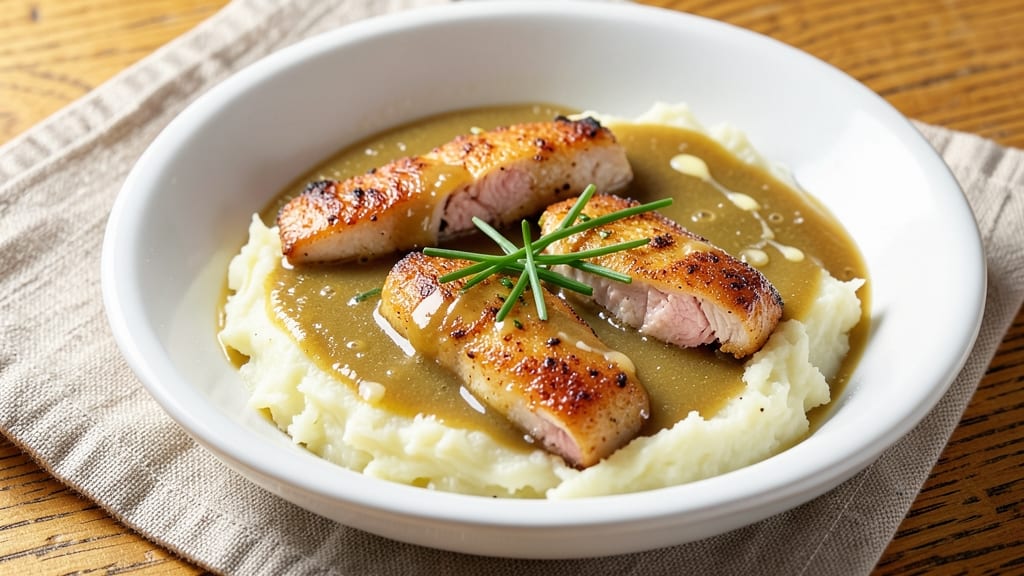
Transforming a simple can of Campbell's Cream of Chicken Soup into velvety, lump-free gravy is the secret weapon behind countless comforting meals.
This recipe builds on the rich, savory base of the soup while adding a professional touch that eliminates the risk of clumps and delivers a smooth, creamy texture every time. The process is straightforward but requires precise timing to achieve that restaurant-quality finish.
What sets this gravy apart is its foolproof thickening method, which relies on a simple roux made from butter and flour. This technique ensures a glossy, velvety consistency without the need for excessive stirring or complicated steps.
The result is a gravy that's versatile enough to elevate biscuits, pasta, or roasted chicken while remaining simple enough for weeknight dinners.
By the end, you'll have a smooth, creamy gravy that's free of lumps and packed with flavor—ready to drizzle over your favorite dishes. The best part? This recipe comes together in just 15 minutes, making it perfect for last-minute meals or when you need a quick but impressive side.
Store leftovers in the refrigerator for up to 5 days or freeze for up to 3 months, ensuring you always have a quick solution for adding richness to any meal. Whether you're serving it with fluffy biscuits or creamy mashed potatoes, this gravy will become a staple in your kitchen.
Ingredients for campbell's cream of chicken gravy
Just ten ingredients transform canned soup into restaurant-worthy gravy—smooth, creamy, and lump-free every time.
| Ingredient | Amount | Notes |
|---|---|---|
| Campbell's Cream of Chicken Soup 🍲 | 2 cans | 10.5 oz cans, undiluted |
| Unsalted Butter 🧈 | ½ cup | Cold, cubed for roux |
| All-Purpose Flour 🌾 | ½ cup | Sifted for smooth texture |
| Whole Milk 🥛 | ½ cup | Full-fat for creaminess |
| Heavy Cream 🥛 | ¼ cup | Optional for extra richness |
| Salt 🧂 | ¼ tsp | Adjust to taste |
| Black Pepper 🌶️ | ⅛ tsp | Freshly ground preferred |
| Garlic Powder 🧄 | ¼ tsp | For subtle depth |
| Dried Parsley Flakes 🌿 | ¼ tsp | For fresh finish |
| Chicken Broth 💧 | ¼ cup | Low-sodium preferred |
The butter and flour roux is non-negotiable here—it's what gives this gravy that glossy, velvety finish. Use cold butter (straight from the fridge) and cook it low and slow to avoid burning. Costco or Trader Joe's sell unsalted butter in big blocks for the best price, but any brand works. The flour? Diamond Crystal is my go-to—it's finer and absorbs liquid better than most. Sift it first for a silky texture. Pro tip: melt the butter first, then whisk in the flour to make the roux smoother. No lumps, ever.
No heavy cream? Extra whole milk works just fine—just add another tablespoon. Short on chicken broth? Water plus a pinch of bouillon gets you close. The garlic powder and parsley flakes are just for flavor, so skip them if you're in a pinch. Want more depth? Add a splash of lemon juice at the end—brightens the whole thing. And if you're using a boxed roux mix, skip it. This homemade version tastes like you actually made it from scratch (which you did).
This gravy reheats like a dream—just stir in a splash of milk or broth if it thickens. Keeps 5 days in the fridge, 3 months frozen. I double the batch and freeze half in ice cube trays. Perfect for quick meals later. For serving, strain it through a fine-mesh sieve if you want it extra smooth—especially good if you added any extra herbs or spices. Leftovers? Just reheat with a splash of milk to loosen it up.
Why You'll Love This Recipe
- No Panic, Just Pan: I’ve made gravy before where I ended up with a lumpy disaster—this isn’t that. The roux takes three minutes max, and the key is just whisking like your life depends on it (almost). No chopping, no peeling, just melting butter, stirring flour, and pouring liquids slowly—it’s that simple. My kids can handle this step.
- Richness Upgraded: That can of Campbell’s soup alone is good, but adding the heavy cream and a splash of broth? Suddenly it’s not the same. The garlic powder and parsley flakes give it a little something extra—like the difference between a plain sandwich and one with mustard. Honestly, the texture is so velvety, you’ll forget it’s homemade.
- Dinner Solved: Need something over mashed potatoes? Roast chicken? Biscuits? This gravy does it all. It’s the kind of thing you can make on a Tuesday night and still feel fancy. Plus, it’s the perfect way to use up leftover chicken—just toss it in and call it a meal. My roommates always ask for seconds, and I don’t even have to cook extra.
- Leftovers That Last: This makes about four cups, and honestly, I never have trouble using it up. It keeps for five days in the fridge, so you can make it once and have it ready for multiple meals. Freeze half if you’re feeling ahead—just thaw and reheat, and it’s like new. Budget-friendly? Yes. Time-saving? Absolutely.
Step-by-step instructions for Campbell's cream of chicken gravy
Here's how to create a velvety, lump-free gravy that's richer than canned versions.
Create a Smooth Roux with Butter and Flour
In a medium saucepan over medium heat, melt the 0.5 cup unsalted butter completely. You'll see it foam gently as it melts—this is normal. Once fully melted, reduce heat to medium-low and gradually whisk in the 0.5 cup all-purpose flour. Here's the thing—you want to cook this mixture for 2-3 minutes until it turns a light golden color and smells nutty.
This is your roux foundation, and cooking it properly prevents lumps later. Stir constantly with a wooden spoon or whisk, scraping the bottom of the pan to ensure even cooking. If the roux darkens too quickly, reduce heat slightly—you're aiming for golden, not brown. The roux should thicken noticeably but still be smooth.
Gradually Add Liquids to Prevent Lumps
With the roux still on medium-low heat, slowly pour in the 0.25 cup chicken broth while whisking continuously. The mixture will bubble vigorously at first—this is normal. After about 1 minute, gradually add the 0.5 cup whole milk in a thin, steady stream, whisking constantly to prevent lumps from forming.
Once all liquids are incorporated, stir for another 2-3 minutes until the mixture thickens slightly. You'll notice it coats the back of a spoon smoothly. This gradual addition is key—it allows the flour to fully hydrate without creating clumps. If you see any lumps forming, use an immersion blender for 10 seconds to smooth them out.
Incorporate Campbell's Cream of Chicken Soup
Reduce heat to low and stir in the 2 cans Campbell's Cream of Chicken Soup (do not open the cans first—add them directly from the can). The soup will thicken the gravy immediately. Stir for 2-3 minutes until the mixture is completely smooth and heated through. You'll notice the gravy becomes rich and velvety—this is where the magic happens.
Taste and adjust seasoning with the 0.25 tsp salt and 0.125 tsp black pepper. The Campbell's soup already contains some salt, so go easy with the added salt. Stir in the 0.25 tsp garlic powder and 0.25 tsp dried parsley flakes next. These add subtle depth and freshness without overpowering the creamy base.
Finish with Heavy Cream for Richness
Return heat to low and gently stir in the 0.25 cup heavy cream. The gravy will become even richer and silkier. Simmer for 1-2 minutes—just enough to heat through without curdling the cream. You're looking for a gravy that coats the back of a spoon smoothly with no separation.
For the ultimate finish, strain the gravy through a fine-mesh sieve into a clean saucepan. This removes any potential lumps and gives you a perfectly smooth texture. Taste again and adjust seasoning if needed. The gravy should be creamy, flavorful, and ready to serve over mashed potatoes, biscuits, or roasted chicken.
Pro Tips For Making Campbell'S Cream Of Chicken Gravy
- Whisk Like You Mean It: That first minute after adding the 0.5 cup whole milk is when lumps decide whether to ruin your gravy or not. I used to stir half-heartedly and ended up with gluey chunks—now I attack it like I’m trying to win a whisking contest. Keep the heat at medium-low and move that whisk in fast, steady circles until the mixture thickens noticeably.
- Cube That Butter: Cold, cubed butter makes a smoother roux than melted butter straight from the fridge. I learned this after my first batch turned grainy—now I cut the 0.5 cup unsalted butter into even ½-inch cubes and let them sit out for 10 minutes before cooking. They melt slower, giving you time to whisk in the 0.5 cup all-purpose flour without burning it.
- Skip the Pre-Opening Cans: Opening those 2 cans Campbell’s Cream of Chicken Soup first is a rookie move. The cold, condensed soup hits the hot roux and can cause a sudden, uneven thickening—or worse, curdling. Add them straight from the can while the roux is still on low heat, and stir immediately. Trust me, your gravy will thank you.
- Strain for Silkiness: I used to skip the straining step, thinking the immersion blender was enough. Then I tasted the difference—straining through a fine-mesh sieve removes those last stubborn lumps and gives you gravy so smooth it’ll make your mashed potatoes look like a million bucks. Do it right before serving, or your future self will wonder why it’s not perfect.
Make-ahead tips for this campbell's cream of chicken gravy
Prep Ahead for Effortless Cooking
I always make this gravy the night before and store it in the fridge—it tastes even better after resting! The flavors meld overnight, and reheating is a breeze. Just cover the container tightly with foil or a lid to prevent drying out.
This is my go-to trick for busy weeknights when I need a restaurant-quality side with minimal effort. 💫
Double the Batch for Freezer Portions
Double the recipe and freeze half in quart-sized freezer bags—they stack perfectly in your freezer. Label each bag with the date and use within 3 months for best quality.
Thaw overnight in the fridge for smooth reheating, or pop a bag in the microwave with a splash of milk to loosen it up. This saves me from last-minute grocery trips during hectic weeks.
Freeze in Ice Cube Trays
For individual servings, pour the cooled gravy into ice cube trays and cover with plastic wrap. Freeze until solid, then transfer cubes to a labeled freezer bag. These are perfect for adding to soups or sauces later—just pop one or two into your dish.
The cubes also reheat faster than larger portions, which I love for quick meals. ⏰
Reheat Smartly for Best Texture
When reheating, add 1-2 tablespoons of whole milk or chicken broth to prevent thickening. Stir constantly over low heat until fully warmed through. If using the microwave, heat in 30-second intervals and stir between each.
This prevents separation and keeps the gravy silky smooth—no clumps or dry spots. I always taste it after reheating and adjust seasoning if needed.
Strain Before Freezing
For the smoothest texture after freezing, strain the gravy through a fine-mesh sieve before freezing. This removes any potential lumps that might form during the cooking process. I also let it cool completely before freezing to avoid ice crystals.
When you're ready to use it, thaw and reheat as usual—it'll taste just as creamy as the day you made it. 🥣
Nutrition facts
Frequently asked questions
Why does my gravy keep getting lumps even after following the recipe?
The key to lump-free gravy lies in the roux and liquid addition. Always whisk continuously while adding liquids, and if lumps appear, use an immersion blender for 10 seconds to smooth it out. Cooking the roux properly for 2-3 minutes until golden is also critical—this ensures the flour fully absorbs the liquid without clumping.
Can I skip the heavy cream and still get a rich gravy?
The 0.5 cup whole milk alone will give you a creamy texture, but if you want extra richness, add a splash of chicken broth instead of heavy cream. The milk provides enough creaminess while keeping the gravy light and smooth.
How do I adjust the seasoning if the Campbell's soup is already salty?
The 2 cans of Campbell's Cream of Chicken Soup already contain salt, so taste before adding the extra 0.25 tsp salt. Start with a pinch and adjust gradually—your palate will guide you. The 0.125 tsp black pepper and 0.25 tsp garlic powder add depth without overpowering.
Can I make this gravy ahead of time?
Yes! Store it in an airtight container in the fridge for up to 5 days. For longer storage, freeze it for up to 3 months. Reheat with a splash of milk or broth to restore smoothness. The flavors actually improve after resting overnight.
What’s the best way to serve this gravy?
This gravy shines over mashed potatoes, fluffy biscuits, or roasted chicken. It also works beautifully with pasta or as a topping for casseroles. Strain it through a fine-mesh sieve before serving for that ultra-smooth finish.