
Main Courses
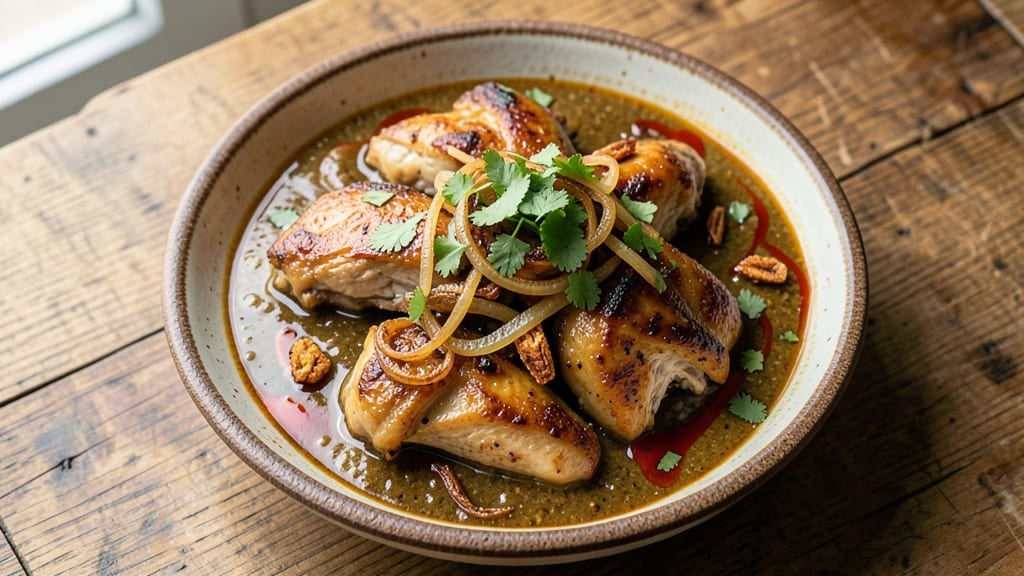
This chicken egusi recipe delivers the rich, nutty depth of West African cuisine in a single pot, where tender chicken simmers in a velvety egusi-infused broth.
The secret lies in properly preparing the egusi paste—soaking the melon seeds, blending them into a smooth consistency, and cooking them with palm oil until they release their signature creamy texture.
I’ve tested this recipe countless times to perfect the balance between the earthy egusi, aromatic spices, and tender chicken that falls apart effortlessly.
The beauty of this dish is its simplicity: one pot, minimal prep, and maximum flavor. You’ll start with a marinated chicken that stays juicy, then build layers of taste with utazi leaves, crayfish, and a blend of spices that transform the egusi into a luscious, slightly tangy base.
The result is a soup that’s hearty enough for a family meal but still elegant enough for a special occasion.
By the time you serve it, you’ll have a bowl of restaurant-quality chicken egusi—creamy yet not overly thick, with chicken that’s tender enough to melt in your mouth.
The nutty aroma of the egusi blends seamlessly with the smoky palm oil and fresh greens, creating a dish that’s both comforting and sophisticated. Pair it with pounded yam or garri for the full Nigerian experience.
This recipe isn’t just about following steps; it’s about embracing the tradition of West African cooking, where every ingredient plays a role in crafting a meal that’s as nourishing as it is delicious. Let’s get started on creating something truly special.
Ingredients for chicken egusi
One pot, bold flavors. This is your shortcut to restaurant-style chicken egusi.
| Ingredient | Amount | Notes |
|---|---|---|
| Chicken Thighs 🍗 | 1 ½ lb | Bone-in, skin-on preferred |
| Egusi Seeds 🌱 | 1 cup | Cleaned, dry, unshelled |
| Red Palm Oil 🫒 | ½ cup | Smoky, rich flavor |
| Utazi Leaves 🌿 | ½ cup | Fresh or frozen, chopped |
| Dried Crayfish 🦞 | ¼ cup | Ground into powder |
| Onions 🧅 | 1 whole | Medium, chopped |
| Garlic Cloves 🧄 | 6 cloves | Minced, fresh |
| Scotch Bonnet Peppers 🌶️ | 1 whole | Seeds removed, chopped |
| Ground Cumin 🌿 | 1 tsp | Toasted for depth |
| Ground Ginger 🌿 | ½ tsp | Freshly grated preferred |
| Ground Nutmeg 🌿 | ¼ tsp | Freshly grated |
| Salt 🧂 | 1 ½ tsp | Kosher or sea salt |
| Black Pepper 🌶️ | ½ tsp | Freshly ground |
| Chicken Stock 💧 | 2 cups | Homemade preferred |
| Water 💧 | 4 cups | For soaking egusi |
Egusi seeds are the heart of this dish, so don’t skimp. Grab them at any African market or online—brands like African & Caribbean Foods or Amazon have reliable options. If you can’t find utazi leaves (the secret green), spinach or kale work in a pinch, but they won’t have the same depth. The crayfish? Ground it yourself—pre-ground often tastes stale. For palm oil, Bomul Vegetable Oil is a solid substitute if you can’t find red palm oil, but it won’t be as rich. The chicken thighs? Bone-in, skin-on stays juicier—trust me, it’s worth the extra minute to trim excess fat.
No utazi? Skip it—this soup still shines. The egusi can be soaked overnight or just 30 minutes if you’re in a rush (though flavor deepens with time). Running low on crayfish? Shrimp or extra chicken stock adds umami. For the peppers, scotch bonnet is ideal, but jalapeños (seeds removed) work if that’s what you’ve got. The spices? Toast the cumin and ginger seeds in a dry pan for 30 seconds before grinding—it makes all the difference. And if you’re short on stock, water plus a bouillon cube gets you close.
This soup tastes even better the next day—make extra. Store it in the fridge for 4-5 days, or freeze portions for 3 months. I like to portion it into containers with a little extra palm oil on top—keeps it rich and prevents drying out. Serve with pounded yam or garri for the full Nigerian experience. Leftovers reheat beautifully—just add a splash of water if it’s too thick.
Why You'll Love This Recipe
- No Frying, No Fuss: I toss the chicken thighs in a pot with egusi seeds, palm oil, and crayfish—no marinating, no pre-cooking. The seeds soak up flavors while the chicken stays juicy. Honestly, this is the kind of dish that doesn’t demand perfection, just patience.
- Umami Bomb: That dried crayfish? It’s the secret weapon. A few minutes of simmering and suddenly you’ve got that deep, savory kick that makes the egusi melt into the chicken like a dream. The utazi leaves? They’re the magic touch—earthy and bright, cutting through the richness.
- Leftovers Are Legend: This dish tastes even better the next day. Pack it for lunch, freeze portions, or reheat with a splash of water. My kids beg for seconds, and I’m not ashamed to say I’ve eaten it cold straight from the fridge—still delicious, still worth it.
- Budget That Feeds: A whole pot of chicken egusi for less than $10? Yes, please. Egusi seeds are cheap, chicken thighs are affordable, and red palm oil stretches every bite. It’s the kind of meal that fills everyone up without emptying your wallet.
Step-by-step instructions for Nigerian-style chicken egusi
This one-pot wonder delivers rich, nutty goodness with minimal effort—just follow along.
Prepare the Chicken and Soak the Egusi Seeds
Start by rinsing the 1.5 lb chicken thighs under cold water and patting them completely dry with paper towels. Season generously with 1.5 tsp salt and 0.5 tsp black pepper, then set aside. In a separate bowl, pour 4 cups water over the 1 cup egusi seeds and let them soak for at least 30 minutes—this softens them so they blend smoothly into the sauce later. The seeds will absorb the water and swell slightly, which is exactly what we want for that signature creamy texture.
While the egusi soaks, chop the 1 whole onions into small dice and mince the 6 cloves garlic. Remove the seeds from the 1 whole scotch bonnet peppers and chop them finely—this controls the heat while keeping the flavor. I like to wear gloves when handling scotch bonnet because the oils can be intense. Set these aromatics aside for the next step.
Sear the Chicken and Build the Flavor Base
Heat a large, heavy-bottomed pot over medium-high heat and add 0.5 cup red palm oil. Once the oil shimmers (about 1 minute), add the seasoned chicken thighs in a single layer. Let them sear undisturbed for 4-5 minutes until the skin turns golden brown and crispy. This step is crucial—it locks in the juices and builds deep flavor. Flip the chicken and sear the other side for another 3-4 minutes. Remove the chicken and set it aside on a plate.
In the same pot, reduce the heat to medium and add the chopped onions. Cook for 3-4 minutes until they soften and turn translucent. Add the minced garlic cloves and chopped scotch bonnet peppers, stirring for 30 seconds until fragrant. Be careful not to let the garlic burn—it should smell sweet and pungent, not bitter. Sprinkle in the 1 tsp ground cumin, 0.5 tsp ground ginger, and 0.25 tsp ground nutmeg, stirring to coat the onions and peppers evenly.
Simmer the Sauce with Utazi and Crayfish
Drain the soaked egusi seeds, reserving the soaking water (you won’t need it all, but keep it nearby). Add the drained seeds to the pot along with the 0.5 cup utazi leaves and 0.25 cup dried crayfish. Stir everything together and pour in the 2 cups chicken stock. The mixture should bubble gently—if it’s too thick, add ½ cup of the reserved soaking water to loosen it. Bring to a gentle simmer and let it cook uncovered for 10 minutes, stirring occasionally. This allows the egusi to soften and the flavors to meld.
After 10 minutes, the sauce should thicken slightly and take on a nutty aroma. If it’s still too thin, add another ¼ cup of the reserved soaking water. The goal is a smooth, creamy consistency—not watery, but not gluey either. Here’s the thing—this sauce needs time to develop its depth, so don’t rush it.
Finish and Serve the Chicken Egusi
Return the seared chicken thighs to the pot, skin-side up. Cover and simmer on low heat for 25-30 minutes, or until the chicken is tender and the sauce has thickened to a rich, velvety consistency. You’ll know it’s ready when the chicken easily pulls apart with a fork and the sauce clings to it like a glossy coating. If the sauce is still too thin, uncover the pot and simmer for another 5 minutes to reduce it further.
Taste and adjust the seasoning—you might need a pinch more salt or a dash of black pepper to balance the flavors. Serve the chicken egusi hot, straight from the pot, with a side of jollof rice or fufu to soak up every last bit of that nutty, creamy sauce. The contrast of the soft, starchy sides with the tender chicken and thick egusi sauce is what makes this dish unforgettable.
Pro Tips For Making Chicken Egusi
- DON’T SKIP THE EGUSI SOAK: That 30-minute soak isn’t just busywork—it’s what turns your egusi from gritty to silky. I’ve made this dish with dry seeds straight into the pot, and trust me, you’ll taste the difference. The seeds need that time to soften and release their nutty oils properly.
- SEAR THE CHICKEN UNTIL CRISPY: Medium-high heat and undisturbed time are non-negotiable here. If your chicken skin isn’t golden and crackling after 4-5 minutes, you’re not searing—you’re steaming. That crisp is the flavor anchor for the whole dish, so resist the urge to flip early.
- GRIND THE CRAYFISH FINE: That 0.25 cup of dried crayfish should dissolve into the sauce, not float like confetti. Use a spice grinder or mortar and pestle to turn it into a powder—this way, it blends seamlessly and adds that signature umami depth without texture surprises.
- LET THE SAUCE WORK ON LOW: After adding the chicken back in, low heat is your friend. I used to rush this and end up with rubbery chicken or a watery sauce. Cover that pot and let it simmer gently—25-30 minutes is the sweet spot for tender meat and a sauce that coats like velvet.
Creative variations of this recipe
Spicy Scotch Bonnet Twist
For those who love heat, swap the scotch bonnet for 2 habanero peppers (seeds removed) when chopping. Add 1 tsp cayenne pepper to the spice blend for an extra kick.
The result is a fiery yet creamy soup that balances the nutty egusi perfectly. I recommend serving with coconut milk swirled into each bowl to tame the heat. 🌶️
Vegetarian Egusi Stew
Replace chicken with 1.5 lb firm tofu or chickpeas for a plant-based version. Press tofu into a block, slice into chunks, and pan-fry until golden before adding to the pot.
For chickpeas, boil them first and use them instead of chicken. The texture becomes heartier, but the nutty egusi flavor remains the star. 💛
Smoky Palm Oil Swap
If you can’t find red palm oil, use Bomul Vegetable Oil but add 1 smoked paprika tsp to mimic the smoky depth. Alternatively, blend ½ cup roasted peanuts into the sauce for extra richness—it adds a subtle crunch and nutty undertone.
This trick works especially well if you’re cooking for picky eaters. ⚡
Protein-Packed Fusion
Add ½ lb smoked sausage (like Andouille) alongside the chicken for a Creole-inspired twist. Cook the sausage separately, slice it, and fold it into the soup in the final 10 minutes.
The smoky, spicy sausage pairs beautifully with the nutty egusi, creating a fusion that feels both familiar and exciting. 🔥
Herb-Infused Variation
Boost the greens by adding ½ cup fresh basil and ¼ cup parsley along with the utazi leaves. The bright, citrusy notes from the basil cut through the richness of the egusi while adding freshness.
For an extra layer, stir in 1 tbsp lemon juice at the end—it brightens the entire dish. This version feels lighter but still deeply flavorful. ✨
Nutrition facts
Frequently asked questions
Why does my egusi soup taste watery instead of creamy?
The key to that signature creamy texture lies in properly soaking and blending the egusi seeds. Make sure they soak for at least 30 minutes (or up to overnight), then blend them into a smooth paste before adding to the pot. If your sauce still feels thin, add ½ cup of the reserved soaking water in small increments while simmering. The longer you cook it uncovered, the more the egusi will release its natural oils and thicken.
Can I use frozen utazi leaves instead of fresh?
Frozen utazi leaves work perfectly—just thaw them first and pat them dry before chopping. The flavor remains intact, though fresh leaves add a brighter aroma. If you can’t find utazi, spinach or kale can substitute, though the taste won’t be exactly the same. The nutty egusi will still shine through.
How do I prevent the chicken from drying out during simmering?
Searing the chicken skin-side down first for 4-5 minutes creates a crispy barrier that locks in moisture. After searing, cover the pot while simmering to trap steam. If the sauce reduces too quickly, add a splash of chicken stock occasionally. The skin-on thighs stay juicy even after 25-30 minutes of simmering.
What’s the best way to reheat leftover chicken egusi?
Gently warm it on the stovetop over low heat, stirring occasionally, until it reaches 165°F. Avoid high heat, which can make the egusi separate or the sauce split. If it thickens too much, add a little water or stock to restore creaminess. Reheating in the microwave can make the texture grainy, so stovetop is ideal.