
Main Courses
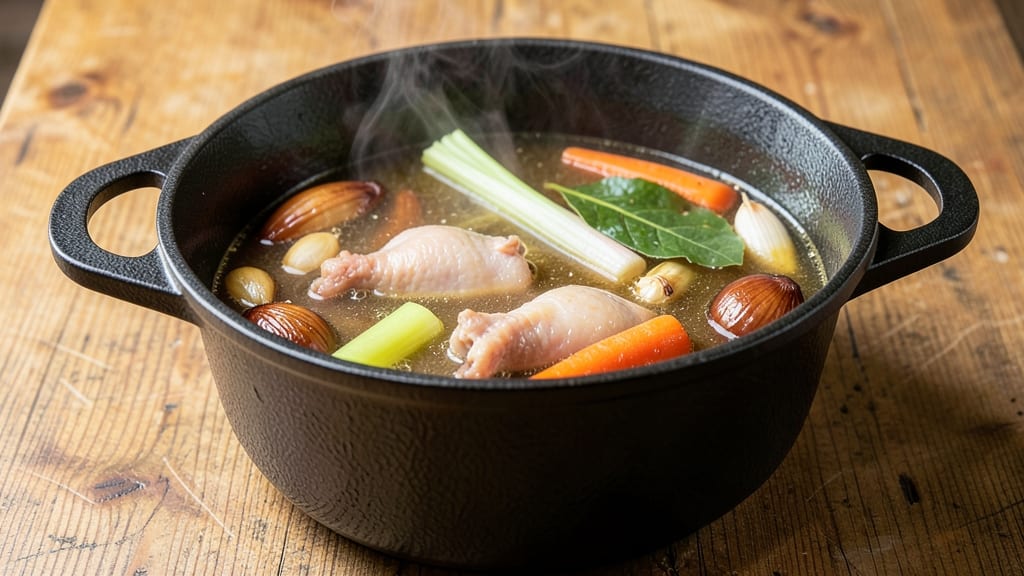
Creating an umami-rich chicken feet stock transforms ordinary dishes into restaurant-quality meals with layers of depth you won't find in store-bought broths. The secret lies in slow simmering chicken feet—nature's collagen powerhouse—alongside aromatic vegetables, which break down into a velvety, gelatinous broth packed with savory complexity.
This isn't just stock; it's the flavor foundation that elevates soups, braises, and sauces to new heights.
The process is precise yet simple: chicken feet, onions, carrots, celery, and herbs simmer for 12-16 hours, extracting maximum gelatin and flavor without bitterness. The key is patience—rushing this step sacrifices depth.
What you'll end up with is a golden, aromatic broth so rich it reduces beautifully into sauces or forms the backbone of hearty stews, turning simple ingredients into something extraordinary.
This stock keeps for up to 3 months in the freezer, making it a pantry essential for home cooks serious about flavor. Whether you're making pho, braising meats, or enriching sauces, this umami bomb will become your secret weapon. Ready to transform your cooking?
For best results, use organic chicken feet and avoid overcrowding the pot—this ensures even extraction and prevents cloudiness. The longer it simmers, the deeper the flavor. Let's get started on building your flavor foundation.
Ingredients for chicken feet stock
Chicken feet, aromatics, and patience create restaurant-quality umami broth that transforms ordinary meals.
| Ingredient | Amount | Notes |
|---|---|---|
| Organic Chicken Feet 🦐 | 3 lb | Frozen or fresh, cleaned |
| Yellow Onions 🧅 | 4 whole | Quartered, skins removed |
| Carrots 🥕 | 4 whole | Roughly chopped, peels on |
| Celery Sticks 🌿 | 4 whole | Roughly chopped, leaves removed |
| Garlic Cloves 🧄 | 6 cloves | Unpeeled, smashed for flavor |
| Fresh Bay Leaves 🌿 | 3 whole | For aromatic depth |
| Dried Thyme 🌿 | 1 tbsp | Or 1 tsp fresh thyme |
| Black Peppercorns 🌶️ | 1 tbsp | Whole, lightly crushed |
| Diamond Crystal Kosher Salt 🧂 | 1 tbsp | For precise seasoning |
| Water 💧 | 12 cups | Filtered or spring water |
Organic chicken feet are non-negotiable here—they deliver that deep, gelatinous richness. Costco or specialty Asian markets often carry them frozen, which works perfectly. If you're buying fresh, ask the butcher to clean them—it's a game changer. The key is not overcrowding the pot, or you'll end up with a murky broth instead of the golden, clear liquid you want. I always use 3 pounds for a big batch because it makes enough for multiple uses—freeze half and keep half in the fridge for quick meals. The unpeeled garlic cloves add subtle sweetness as they soften, while the bay leaves give that herbal depth that store-bought stock can't match.
No fresh thyme? Dried works at one-third the amount, but honestly, I always grab a bunch of fresh when I'm making this—it's worth the extra trip to the farmers market. Want to skip the peppercorns? 1 tsp ground black pepper gets you close. The kosher salt is crucial for precision—Diamond Crystal is my go-to because it dissolves evenly. Water quality matters too—filtered or spring water avoids any off flavors. And if you're short on carrots or celery, parsnips or fennel add a different but equally delicious depth to the broth.
This stock is all about patience—12-16 hours of simmering is non-negotiable for that perfect gelatinous texture. Strain through a fine-mesh sieve to remove all solids, then let it cool completely before refrigerating. It keeps for up to 3 months in the freezer, but honestly, it tastes even better after a few days as the flavors meld. I portion mine into 1-quart freezer bags so I can grab just what I need for pho, braises, or risotto. And if you're worried about waste, save the rendered fat—it's pure umami gold for searing meats or making pan sauces.
Why You'll Love This Recipe
- No-Fuss Simmer: Honestly, the hardest part is scrubbing those chicken feet—once that’s done, it’s just throw-in-the-pot-and-forget-it for hours. I’ll be real: the only chopping you’re doing is quartering onions and roughing up carrots and celery, so it’s not like you’ll spend 30 minutes prepping.
- Umami Bomb: That 3-pound haul of organic chicken feet? It’s pure collagen gold. The garlic and thyme hit like a warm hug, but the real magic is how the stock turns from clear to thick, creamy perfection—like a rich, savory hug for your taste buds. The bay leaves and peppercorns add depth that makes every sip addictive.
- Freezer’s Best Friend: Between the fridge and freezer, you’ve got this stock covered for weeks. Freeze half, keep half—no more last-minute store runs when you’re craving a quick ramen or risotto. My daughter even steals a cup for her noodles, and she’s not a broth snob. It’s that good.
- Budget’s Secret Weapon: Spend a little upfront on organic chicken feet, and suddenly you’ve got a pantry staple that costs pennies per use. A 3-pound batch feeds a crowd for days, and the flavors only get better as it sits. I’ll be real: it’s one of those recipes that makes me feel like I’m cooking for a Michelin star without the price tag.
Step-by-step instructions for chicken feet stock
Transform humble ingredients into a velvety, umami-packed broth that elevates any dish.
Prepare the Chicken Feet for Maximum Flavor
Start by examining the 3 lb organic chicken feet. If they're frozen, thaw them completely in cold water to preserve texture. Rinse thoroughly under cool running water to remove any surface debris, then scrub gently with a vegetable brush to ensure cleanliness. This step is critical—any remaining dirt can cloud your stock later.
Place the cleaned chicken feet in a large stockpot. The feet should fit comfortably without overcrowding, which prevents even cooking. Add the 4 whole yellow onions, quartered, and the 4 whole carrots, roughly chopped with peels on. These vegetables form the aromatic base that will infuse the broth with sweet, earthy depth. Don't peel the carrots—their skins contain additional nutrients and color.
Build the Vegetable Foundation and Season
Add the 4 whole celery sticks, roughly chopped with leaves removed, to the pot along with the 6 cloves garlic, smashed unpeeled for maximum flavor extraction. The celery and garlic will contribute bright, herbal notes that balance the richness of the chicken feet. Stir everything gently to distribute the ingredients evenly.
Tuck the 3 whole fresh bay leaves into the vegetable mixture—their piney aroma will permeate the broth during simmering. Sprinkle the 1 tablespoon dried thyme and the 1 tablespoon lightly crushed black peppercorns over the top. The thyme adds earthy warmth while the peppercorns introduce subtle heat. Finally, add the 1 tablespoon diamond crystal kosher salt, which will enhance all the flavors as the stock develops.
Cover with Water and Bring to a Gentle Simmer
Pour the 12 cups filtered or spring water over the ingredients, ensuring all components are submerged. If any ingredients float to the surface, gently press them down with a wooden spoon. Place the pot over medium-high heat and bring to a full rolling boil, stirring occasionally to prevent scorching at the bottom.
Once boiling vigorously, immediately reduce the heat to maintain a gentle simmer. This low-and-slow approach is essential—it allows the collagen in the chicken feet to break down gradually, creating that signature silky texture. You'll see small bubbles breaking at the surface and occasional wisps of steam rising, but the liquid should never roar or foam violently. Skim off any foam or impurities that rise to the surface during the first 30 minutes of simmering.
Simmer for Deep Flavor Development
Cover the pot with a lid and let the stock simmer gently for 3 to 4 hours. The chicken feet will gradually release their gelatinous collagen into the liquid, transforming it from clear to opaque. Check periodically to ensure the water level hasn't evaporated significantly—add hot water if needed to maintain the 12-cup volume. The aroma will become increasingly rich and complex, with notes of roasted chicken, caramelized vegetables, and herbal depth.
After 3 hours, remove the lid and continue simmering uncovered for another 30 to 60 minutes. This final uncovered phase allows the stock to reduce slightly, intensifying the flavors. The chicken feet should be tender enough to pull apart easily with a fork, though they'll continue to break down as they cool. Strain the stock through a fine-mesh sieve or cheesecloth-lined colander, pressing gently on the solids to extract every last drop of flavor.
Cool and Store for Maximum Freshness
Transfer the strained stock to clean containers, leaving about 1 inch of headspace at the top to prevent mold growth. Let it cool to room temperature, then refrigerate or freeze immediately. Properly stored, this chicken feet stock will keep in the refrigerator for up to 5 days or in the freezer for 3 to 6 months. The flavor only improves with time as the collagen continues to gel and the aromatics meld.
Use this umami-rich broth as a base for soups, braises, or risottos. The gelatinous quality will give sauces remarkable body and depth, while the concentrated flavors will elevate even the simplest dishes. For best results, reheat gently on the stovetop—never microwave—until just warmed through to preserve its velvety texture.
Pro Tips For Making Chicken Feet Stock
- Scrub Those Feet: I learned this the hard way—skipping the scrub with a vegetable brush leaves gritty bits that turn your stock cloudy. Focus on the crevices where dirt hides, and rinse until the water runs clear. Trust me, your future self will notice the difference when the broth stays crystal-clear.
- Smash, Don’t Peel: Those 6 unpeeled garlic cloves need to be smashed hard enough to crack the skin but left whole—peeling them first means you’re losing flavor. The skins add depth, and smashing them releases oils without turning your stock bitter. A heavy knife or mortar does the job better than a flimsy garlic press.
- Simmer Low and Slow: After the initial boil, resist the urge to rush—this stock needs a gentle simmer, not a rolling boil. If it’s too aggressive, the feet will toughen instead of melting into gelatin. Watch for tiny, consistent bubbles and adjust the heat so it’s barely moving. Patience here makes the difference between a thin broth and one with body.
- Press and Strain Hard: Don’t just pour the stock through the sieve—wrap cheesecloth around the solids and squeeze every last drop out. The feet and veggies hold onto flavor, and skipping this step means losing that rich, umami depth. It’s messy, but worth it for a stock that tastes like it simmered all day.
Pro cooking tips for this dish
Master the Gentle Simmer
This is where patience pays off—3-4 hours of gentle simmering transforms chicken feet into gelatinous magic. I use a heavy-bottomed stockpot like my Le Creuset Dutch oven because it distributes heat evenly and prevents scorching.
The key is maintaining a barely rolling boil—small bubbles breaking at the surface, not a violent boil. If your stockpot is too small, it’ll overheat and burn the bottom. 🌡️
Skim Like a Pro
During the first 30 minutes of simmering, foam will rise to the surface. This isn’t just scum—it’s impurities that can make your broth cloudy. Use a slotted spoon or fine-mesh skimmer to remove it.
I do this every 5 minutes until the foam stops forming. If you skip this step, your stock will taste dull and murky.
Uncovered Reduction
After 3 hours, remove the lid and simmer uncovered for 30-60 minutes. This reduces the liquid slightly, intensifying the flavors and deepening the umami. The aroma will become irresistible—like a mix of roasted chicken, caramelized onions, and fresh herbs.
I always check the water level and add hot water if it drops below 12 cups. Consistency is key here.
Strain with Precision
Straining is where many home cooks fail. Use a fine-mesh sieve or cheesecloth-lined colander, and press the solids gently with a wooden spoon to extract every last drop of flavor.
Discard the chicken feet—they’ll be tender enough to pull apart, but their collagen has done its job. Don’t skip this step; it’s what separates restaurant-quality stock from homemade.
Cool Quickly, Store Smart
Let the stock cool to room temperature before refrigerating or freezing. I use a large bowl of ice water to speed this up—pour the hot stock into a heat-safe container and place it in the ice bath.
This prevents bacterial growth and helps the gelatin set properly. Store in airtight containers with 1 inch of headspace to avoid mold. 💡
Nutrition facts
Frequently asked questions
Why does chicken feet stock need such a long simmer time?
The 3-4 hour simmer is essential because chicken feet contain collagen, which breaks down slowly into gelatin. This process creates the signature silky texture and deep umami flavor. Skipping this step results in a thin, flavorless broth instead of the rich, velvety base you want. Patience here makes all the difference!
Can I use chicken feet that aren't organic?
While you can technically use non-organic chicken feet, organic ensures cleaner ingredients without pesticides or antibiotics that could affect flavor or safety. The skin and bones in chicken feet absorb contaminants, so organic minimizes any potential off-flavors. For the best results, stick with organic when possible!
What if my stockpot is too small for 12 cups of water?
If your pot can't handle 12 cups, reduce the water slightly but keep the ratio of ingredients proportional. Use a large stockpot or Dutch oven for even heat distribution. Overcrowding causes uneven cooking and can lead to burnt flavors. A heavy-bottomed pot is ideal for this recipe!
How do I reuse the rendered fat from the chicken feet?
The fat rendered from chicken feet is pure umami gold! After straining, let it cool and solidify, then scoop it out and store in an airtight container. Use it for searing meats, making pan sauces, or even drizzling over finished dishes. It adds incredible depth to any dish!
Can I skip the bay leaves and peppercorns?
You can, but you’ll miss out on key flavor layers! Bay leaves add herbal depth, and peppercorns introduce subtle heat. For a simpler version, use 1 tsp ground black pepper instead of whole peppercorns. The thyme and salt are also important for balancing the richness of the chicken feet.