
Soups & Stews
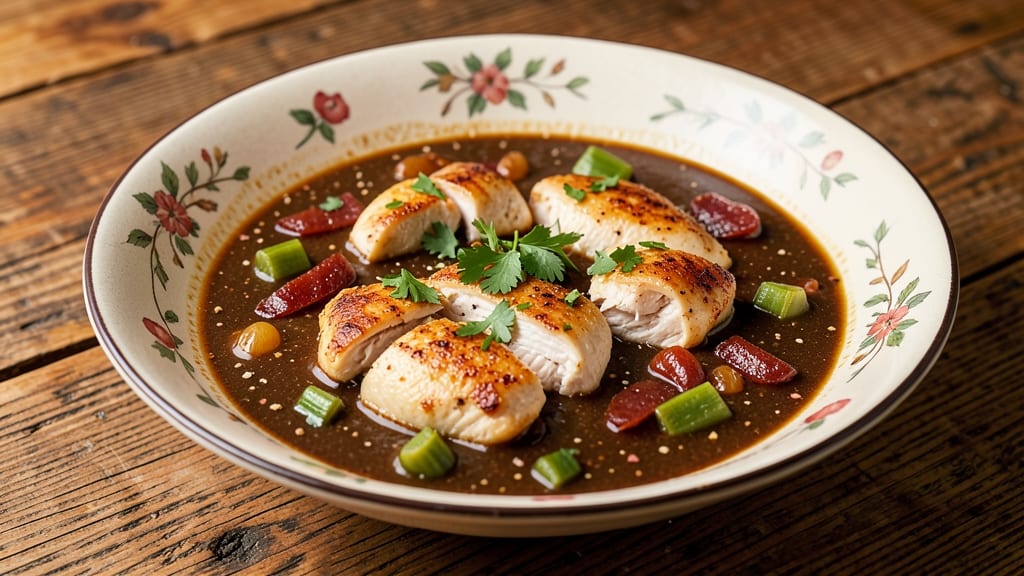
This chicken gumbo recipe transforms a simple pot into a symphony of smoky, spiced flavors that taste like a Louisiana bayou in your kitchen. The foundation begins with a perfect dark roux—rich, nutty, and just shy of burning—that carries the soul of the dish.
I’ve perfected this technique over years of testing, ensuring every spoonful delivers that unmistakable depth that makes gumbo unforgettable.
The secret lies in the layers: tender chicken simmered until fall-apart, the holy trinity of celery, onions, and bell peppers sweating into the roux, and okra or filé powder lending that signature silkiness.
What sets this version apart is the celery crown crunch—a crispy, caramelized garnish that adds texture and visual appeal without overpowering the dish’s balance. It’s the kind of recipe that rewards patience with a flavor experience worth every minute.
By the time you serve it over steamed white rice, your kitchen will smell like a New Orleans restaurant, and every bite will deliver that perfect harmony of smoky, savory, and slightly spicy.
The broth reduces to a velvety consistency, clinging to the chicken and vegetables while the roux’s depth lingers on your tongue. This isn’t just gumbo—it’s a celebration of technique and tradition in one pot.
Whether you’re feeding a crowd or treating yourself to a cozy weeknight meal, this recipe delivers restaurant-quality results with a method that’s both authentic and approachable. The key is confidence in each step—from the roux to the final simmer—and letting the flavors meld naturally. Let’s get cooking.
Ingredients for chicken "gumbo
Pantry staples meet Louisiana tradition. The secret lies in the roux and layers.
| Ingredient | Amount | Notes |
|---|---|---|
| Chicken Thighs 🍗 | 2 ½ lb | Bone-in, skin-on preferred |
| All-Purpose Flour 🌾 | ½ cup | White flour for roux |
| Unsalted Butter 🧈 | ¾ cup | European-style preferred |
| Yellow Onion 🧅 | 1 ½ whole | Medium size, diced |
| Green Bell Pepper 🌶️ | 1 whole | Medium size, diced |
| Celery Stalk 🥬 | 3 whole | Medium size, chopped |
| Garlic Cloves 🧄 | 6 cloves | Fresh, minced |
| Diced Tomatoes 🍅 | 14 ½ oz | Canned, no salt added |
| Chicken Stock 💧 | 3 cups | Homemade preferred |
| Okra 🌱 | 1 cup | Fresh, sliced |
| Filé Powder 🌿 | 1 tbsp | For thickening |
| Cayenne Pepper 🔥 | 1 tsp | Adjust to taste |
| Thyme 🌿 | 1 tsp | Dried, or 1 tbsp fresh |
| Bay Leaves 🌿 | 2 whole | Fresh preferred |
| Salt 🧂 | 1 ½ tsp | Kosher or sea salt |
| Black Pepper 🌶️ | ½ tsp | Freshly ground |
| Celery Crown 🥬 | 1 whole | For garnish |
| Long-Grain White Rice 🍚 | 2 cups | Uncooked, for serving |
The roux is non-negotiable—European-style butter and all-purpose flour from King Arthur or Bob’s Red Mill ensure that nutty depth. Look for bone-in, skin-on chicken thighs at Whole Foods or your local butcher—they stay juicier. The holy trinity (onion, bell pepper, celery) should be finely diced, almost paste-like, for maximum flavor infusion. Canned diced tomatoes from Muir Glen are my go-to—they’re no-salt-added and consistently flavorful. For the okra, fresh is ideal, but frozen works in a pinch if you’re short on time.
No filé powder? Okra is your backup, but it won’t thicken as dramatically. Substitute cornstarch slurry at half the amount if needed, but the texture won’t be the same. Cayenne pepper can be swapped for hot sauce (like Crystal or Tabasco) if you prefer more control over heat. Fresh thyme or bay leaves? Double the dried amount—they’re more concentrated. The chicken stock should be homemade if possible; store-bought works, but Kitchen Basics or Pacific Foods brands are the closest to homemade quality.
Roux can be made ahead and refrigerated for up to 3 days, but it’s best used fresh. The gumbo itself reheats beautifully—simmer gently to avoid breaking down the roux. Store leftovers in the fridge for 4-5 days or freeze for 3 months. For the celery crown, blanch it in boiling water for 2 minutes before crisping in the oven at 400°F for 10-15 minutes. Keep the rice separate until serving—it absorbs the gumbo’s flavors best when steamed just before eating.
Why You'll Love This Recipe
- Let’s talk dollars and cents: a 2.5 lb chicken thighs, butter, flour, and a few veggies? This isn’t a splurge, it’s a smart meal. The filé powder and okra might feel fancy, but they’re game-changers for depth and texture without breaking the bank. Plus, if you’re using pantry staples like canned tomatoes and dried thyme, the cost drops even further.
- No Roux, No Problem: That 20-minute roux might sound intimidating, but honestly? Once you’ve got your butter and flour dancing in the pot, the rest is just stirring. And trust me, the payoff—this deep, nutty brown base—makes every minute worth it. No fancy gadgets, just a wooden spoon and patience.
- Chicken That Melts in Your Mouth: The bone-in, skin-on chicken thighs here aren’t just filling—they’re juicy perfection. After browning them just right and simmering them for 30 minutes, the meat shreds apart like butter. That crispy skin? Chef’s kiss. The broth? Infused with all that savory goodness. It’s the kind of chicken that makes you pause mid-bite.
- Feeds a Crowd (Without the Crowd): This recipe is built for gatherings, but it’s also my go-to for lazy Sundays when I’m feeding three hungry adults and a teenager who’ll eat anything. Double the rice, and you’ve got leftovers for days. And if you’re freezing portions? The roux even reheats beautifully—just add fresh stock when you’re ready to serve.
Step-by-step instructions for chicken gumbo
A rich, layered gumbo begins with a dark roux and careful layering of flavors. Follow these steps precisely to achieve the perfect balance of smoky depth and hearty texture.
Develop the Roux to a Deep Chocolate Color
In a large, heavy-bottomed pot over medium heat, melt the 0.75 cup unsalted butter until it foams and begins to sizzle. Immediately add the 0.5 cup all-purpose flour and stir constantly with a wooden spoon to prevent burning. The mixture will thicken into a paste, then gradually lighten as moisture evaporates.
Continue cooking, stirring frequently, until the roux reaches a deep chocolate brown color—this should take 20-25 minutes. The aroma will become nutty and toasty, signaling the development of rich, complex flavors. If the roux darkens too quickly, reduce the heat slightly to maintain control. Never walk away; a burned roux ruins the entire dish.
Sauté the Holy Trinity and Add Aromatics
Once the roux is perfected, immediately add the 1.5 whole yellow onion, 1 whole green bell pepper, and 3 whole celery stalk, all diced uniformly. Stir to coat the roux completely, then reduce heat to medium-low and cook for 8-10 minutes until the vegetables soften and release their moisture. The mixture should sizzle gently without sticking.
Add the 6 cloves minced garlic and cook for 30 seconds until fragrant—this prevents the garlic from burning, which would impart bitterness. Stir in the 1 tsp thyme and 2 whole bay leaves, then pour in the 14.5 oz diced tomatoes. Simmer for 5 minutes to meld the flavors before proceeding. This foundational step builds the gumbo's signature depth.
Brown the Chicken and Build the Base
Pat the 2.5 lb chicken thighs dry with paper towels and season generously with 1.5 tsp salt and 0.5 tsp black pepper. Working in batches to avoid crowding, sear the chicken in the pot over medium-high heat for 4-5 minutes per side until deeply browned. Remove the chicken and set aside, reserving any rendered fat in the pot.
Deglaze the pot with the 3 cups chicken stock, scraping up all the browned bits from the bottom. Return the chicken to the pot, add the 1 tsp cayenne pepper, and bring to a gentle simmer. Cover partially and cook for 30 minutes, stirring occasionally, until the chicken is tender and the broth begins to thicken slightly. This step ensures the chicken infuses the gumbo with its rich, savory essence.
Incorporate Okra and Simmer to Perfection
Add the 1 cup sliced okra to the pot and stir gently to distribute evenly. Simmer uncovered for 20-25 minutes on low heat, allowing the okra to soften and the gumbo to develop its signature thickness. Taste and adjust seasoning with additional salt or cayenne if needed—this is where the gumbo's character truly emerges.
Remove the chicken from the pot, shred the meat using two forks, and return it to the gumbo. Stir in the 1 tbsp filé powder just before serving—this final step thickens the gumbo into a luscious, velvety consistency. The filé powder must be added last to preserve its thickening power.
Serve Over Rice with Celery Crown Garnish
Cook the 2 cups long-grain white rice separately according to package instructions, fluffing it lightly before serving. Ladle the gumbo over the rice, ensuring each serving gets an ample portion of the rich, flavorful broth. Garnish each bowl with a small piece of the 1 whole celery crown, sliced thinly for a crisp, refreshing contrast to the hearty gumbo.
The gumbo should be served immediately, as its flavors continue to evolve and deepen with each bite. The combination of tender chicken, silky okra, and the smoky roux creates a dish that's both comforting and complex—a true celebration of Louisiana culinary tradition.
Pro Tips For Making Chicken "Gumbo
- Stir Like Your Life Depends on It: I learned this the hard way—when you’re making that 0.75 cup unsalted butter and 0.5 cup all-purpose flour roux, constant stirring is non-negotiable. The second you stop, even for a bathroom break, you’re risking a burned disaster. Use a wooden spoon and keep your wrist moving—no gaps—until that chocolate color appears after 20-25 minutes. (Yes, even if you’re impatient like me.)
- Dice the Trinity Uniformly: The 1.5 whole yellow onion, 1 whole green bell pepper, and 3 whole celery stalk (the Holy Trinity) should all be cut to the same size—about 1/4-inch dice. I used to eyeball it, and the pepper would overcook into mush while the onion stayed tough. A sharp knife and a little extra time here save you from a bland, uneven texture later.
- Don’t Skip the Chicken Rest: After searing the 2.5 lb chicken thighs for 4-5 minutes per side, let them rest for 5 minutes before shredding. I know, I know—you’re eager to dive in. But skipping this step means juices splatter everywhere when you fork the meat apart, and your gumbo ends up watery. Trust the process.
- Simmer Okra Low and Slow: The 1 cup okra needs 20-25 minutes on low heat to break down into that creamy, almost invisible texture. Too much heat, and it turns to mush; too little, and it stays crunchy. Keep the pot uncovered and stir occasionally—this is where the gumbo’s body comes together. (Pro move: Taste the broth before adding the filé powder; adjust salt or cayenne now, not later.)
Essential equipment for this recipe
Heavy-Bottomed Pot
Your first essential tool is a large, heavy-bottomed pot—preferably made of stainless steel or enameled cast iron. This prevents hot spots that can burn your roux while ensuring even heat distribution.
I swear by my Le Creuset Dutch oven for gumbo; it holds 8-10 quarts and distributes heat like a dream. If you’re on a budget, a Lodge cast iron Dutch oven works just as well. Never use a thin-bottomed pot—it’ll make your roux cooking a nightmare.
Wooden Spoon & Spatula
A sturdy wooden spoon is non-negotiable for stirring your roux—it won’t scratch the pot or melt like plastic. I keep a 10-inch wooden spoon from OXO by my stove for this exact purpose.
For scraping up those precious browned bits later, a silicon spatula (like Misen) is my go-to. These tools are affordable and last forever if you take care of them.
Instant-Read Thermometer
While gumbo relies on visual cues for the roux, an instant-read thermometer (like Thermoworks Smoke) helps you monitor temperatures when browning chicken or simmering. The ideal gumbo simmer is 180-190°F—too hot, and you’ll break down the roux; too cool, and it’ll never thicken properly.
This tool gives you confidence to walk away occasionally.
Fine-Mesh Strainer
After removing the chicken, you’ll need to strain out any stray okra bits or shredded skin. A fine-mesh strainer (like Farberware) keeps your gumbo silky smooth. I also use it to remove bay leaves before serving.
Pro tip: Line your strainer with a cheesecloth for extra-fine filtration if you’re feeling fancy. This step makes all the difference in presentation.
Roux Timer & Notebook
Gumbo roux requires 20-25 minutes of undivided attention. Set a timer (I use my KitchenAid digital timer) and jot down notes about color and aroma in a small notebook. This helps you perfect your technique over time.
Trust me, the first few times will be a learning experience—your roux might burn or turn too light. Tracking these details builds your gumbo skills exponentially.
Celery Crown Prep Tools
For that signature celery crown crunch, you’ll need a sharp chef’s knife (I use Wüsthof) and a mandoline slicer (like OXO Good Grips) for even slices. Blanch the crown in boiling water for 2 minutes, then pat dry before crisping in the oven.
This garnish elevates your gumbo from good to unforgettable—it’s worth the extra effort.
Nutrition facts
Frequently asked questions
Why does gumbo need a dark roux?
The dark roux is the heart of gumbo—it develops deep, nutty flavors and a velvety texture by cooking butter and flour until it reaches a rich chocolate brown. This process creates a complex base that carries all the other ingredients' flavors. Skipping this step leaves your gumbo bland and lacking its signature depth. The roux transforms simple ingredients into a dish with soul!
Can I use chicken breast instead of chicken thighs?
While you can use chicken breast, bone-in, skin-on thighs are ideal for gumbo—they stay juicier and add more flavor during the long simmer. If you must use breast, cut it into bite-sized pieces and cook it just until done (no overcooking!). The texture won't be as tender as thighs, but it'll still work in a pinch.
What if my roux burns before reaching the right color?
Don’t panic! If your roux burns, simply start over with fresh butter and flour. The key is patience—reduce heat immediately if it darkens too fast. If you’re in a rush, lower the heat to medium-low and stir constantly. A burned roux ruins the entire dish, so take your time.
How do I adjust spice levels if I don’t like cayenne?
Skip the cayenne entirely or replace it with hot sauce (like Crystal or Tabasco) for more control. For milder heat, reduce the cayenne to ½ tsp or omit it. Taste as you go and adjust to your preference—gumbo should be flavorful, not overwhelming!
Can I make this gumbo ahead of time?
Yes! The roux can be made up to 3 days ahead and refrigerated, but use it fresh for best results. The gumbo itself reheats beautifully—simmer gently on the stove to prevent breaking down the roux. Store leftovers in the fridge for 4-5 days or freeze for 3 months. Just add filé powder right before serving for that perfect texture.