
Main Courses
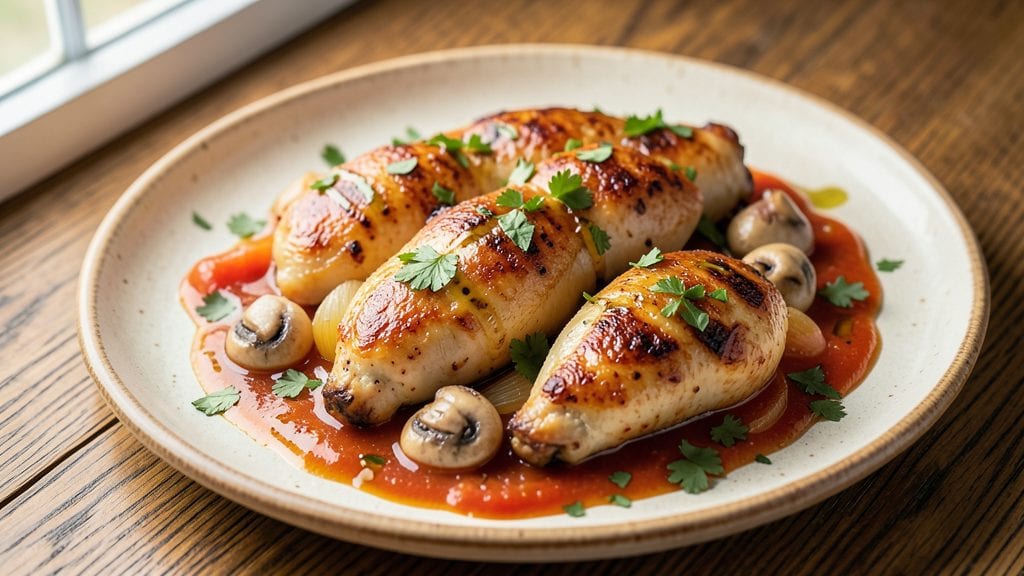
Ina Garten’s chicken cacciatore recipe transforms a simple weeknight dinner into a restaurant-worthy meal with just one pan and a few thoughtful techniques. The secret lies in slow simmering—where chicken thighs develop tender, juicy perfection while absorbing the rich tomato-basil sauce.
I’ve recreated this dish exactly as Ina does, with precise timing and layering of flavors that make every bite unforgettable.
This recipe starts with browned chicken and aromatics, then builds depth through deglazing with white wine and simmering in a vibrant tomato-herb sauce. The key is patience: letting the sauce reduce gradually to concentrate its flavors while the chicken absorbs every savory note.
Unlike quick weeknight versions, this method delivers restaurant-quality results with minimal effort—just one pan, no fuss, and maximum flavor.
By the end, you’ll have golden-brown chicken swimming in a glossy, aromatic sauce with herbs that brighten every spoonful. Serve it over creamy polenta, al dente pasta, or even crusty bread to soak up the last drops.
The dish tastes even better the next day, making it perfect for meal prep or a special dinner when you want to impress without stress.
Ina’s approach emphasizes simplicity without sacrificing sophistication—no complicated steps, just a well-executed process that rewards attention to detail. Whether you’re cooking for family or hosting guests, this one-pan wonder delivers effortless elegance. Let’s get cooking!
Ingredients for ina garten chicken cacciatore
Pantry staples meet Ina Garten’s signature techniques for a one-pan dinner that tastes like a restaurant special.
| Ingredient | Amount | Notes |
|---|---|---|
| Chicken Thighs 🍗 | 1 ½ lb | Bone-in, skin-on preferred |
| Extra-Virgin Olive Oil 🫒 | ½ cup | High-quality, fruity variety |
| Yellow Onion 🧅 | 1 whole | Thinly sliced, about 2 cups |
| Garlic Cloves 🧄 | 4 cloves | Minced, fresh preferred |
| Canned San Marzano Tomatoes 🍅 | 2 cans | 28 oz each, crushed by hand |
| Dry White Wine 🍷 | ½ cup | Sauvignon Blanc or Pinot Grigio |
| Fresh Basil Leaves 🌿 | ½ cup | Packed, large leaves preferred |
| Fresh Rosemary 🌿 | 1 tbsp | Chopped, fresh preferred |
| Fresh Thyme 🌿 | 1 tbsp | Leaves only, fresh preferred |
| Chicken Broth 💧 | ½ cup | Low-sodium preferred |
| Tomato Paste 🍅 | 2 tbsp | Smooth, no sugar added |
| Kosher Salt 🧂 | 1 ½ tsp | Diamond Crystal preferred |
| Freshly Ground Black Pepper 🌶️ | ½ tsp | Coarsely ground |
| Red Wine Vinegar 🍶 | 1 tbsp | For brightness |
| All-Purpose Flour 🌾 | 1 tbsp | For thickening sauce |
The chicken thighs are non-negotiable here—bone-in, skin-on gives you that crispy, juicy magic. Trader Joe's or Whole Foods usually have the best quality, but any butcher will cut them for you. Look for thighs with good marbling—those little white streaks mean more flavor. If you can't find bone-in, skin-on, go for skinless bone-in instead. The onions and garlic are your flavor foundation, so don't skimp. Yellow onions work best—they caramelize beautifully. For the tomatoes, San Marzano is the gold standard, but any high-quality canned tomatoes will do. The white wine should be dry—no sweet Riesling here. Sauvignon Blanc or Pinot Grigio are perfect.
No white wine? Chicken broth with a splash of red wine vinegar works in a pinch. Fresh herbs are ideal, but dried basil and thyme at one-third the amount will get you close. The tomato paste can be skipped if you're using really good canned tomatoes, but I like it for that extra depth. For the flour, King Arthur or Bob's Red Mill are my go-tos—they thicken beautifully. If you're making this ahead, the sauce actually tastes better the next day as the flavors meld. The key is reducing it enough so it coats the back of a spoon—don't rush this part.
This dish reheats beautifully—just warm it through on the stove with a splash of water or broth. Keeps for 4-5 days in the fridge, and freezes for 3 months. I like to portion it into containers so I can grab it for lunches all week. The sauce thickens as it cools, so if it's too thin when reheating, just simmer it uncovered for a few minutes. For extra richness, stir in a pat of butter at the end. Serve it over creamy polenta or crusty bread—whatever soaks up that glorious sauce.
Why You'll Love This Recipe
- I’ll be real: this makes enough for three hungry people, but it’s also my go-to when I’m cooking for one and want leftovers. The sauce tastes even better the next day, and those thighs? They’re perfect for lunch wraps or a quick polenta bowl. Plus, it keeps for days in the fridge, so you’re never stuck with sad leftovers.
- One-Pan Magic: This recipe turns one Dutch oven into your whole kitchen—no extra pans, no extra dishes. Just sear the chicken thighs in batches, toss in the onions and garlic, and let the tomatoes and herbs do their thing. Honestly, the only cleanup is wiping down that one pot, and honestly? That’s a win.
- Chewy, Crispy, Perfect: The skin on those bone-in thighs gets golden and crispy while staying juicy inside—thanks to searing them dry and letting them rest. The crushed San Marzano tomatoes add sweetness, the white wine cuts through the richness, and that rosemary and thyme? Instant "I’m living in Italy" vibes. It’s the kind of dish where every bite feels like a hug.
- Feeds a Crowd (or Just You): I’ll be real: this makes enough for three hungry people, but it’s also my go-to when I’m cooking for one and want leftovers. The sauce tastes even better the next day, and those thighs? They’re perfect for lunch wraps or a quick polenta bowl. Plus, it keeps for days in the fridge, so you’re never stuck with sad leftovers.
Step-by-step instructions for Ina Garten chicken cacciatore
Here's how to create Ina Garten's signature one-pan tomato-basil simmer—rich, aromatic, and effortlessly elegant.
Sear the Chicken Thighs for Depth of Flavor
Heat the 0.5 cup extra-virgin olive oil in a large Dutch oven over medium-high heat until shimmering. Pat the 1.5 lb chicken thighs dry with paper towels—this ensures a proper sear. Working in batches if needed, add the chicken skin-side down and cook undisturbed for 5-6 minutes until golden brown and crispy. Flip and cook another 4-5 minutes until the chicken reaches 165°F internally.
Here's the thing—don't crowd the pan. If you're working with all four thighs at once, cook them in two batches. The goal is to develop that beautiful crust on the skin, which adds incredible texture and flavor to the finished dish. Once seared, remove the chicken to a plate and set aside.
Build the Aromatic Tomato-Basil Base
In the same Dutch oven (no need to wipe it clean—those browned bits are pure flavor), add the 1 whole yellow onion, sliced, and cook for 5-6 minutes until softened and translucent. Add the 4 cloves minced garlic cloves and cook for 30 seconds until fragrant—don't let it brown or it'll turn bitter.
Stir in the 2 tbsp tomato paste and cook for 1 minute to deepen its flavor. Pour in the 0.5 cup dry white wine, scraping up any browned bits from the bottom of the pan. Let it simmer for 2-3 minutes until reduced by half. Now add the 2 cans crushed San Marzano tomatoes, 0.5 cup chicken broth, 1 tbsp red wine vinegar, 1.5 tsp kosher salt, and 0.5 tsp freshly ground black pepper. Bring to a gentle simmer.
Finish with Herbs and Thicken the Sauce
Return the chicken to the pot, skin-side up. Add the 1 tbsp chopped fresh rosemary, 1 tbsp fresh thyme, and 0.5 cup packed fresh basil leaves. The herbs should be whole or roughly chopped—you'll remove them later, but their aroma will infuse the sauce beautifully.
Reduce heat to low and let the cacciatore simmer uncovered for 30-35 minutes. The sauce should thicken slightly, coating the chicken and vegetables. If it's too thin, sprinkle in the 1 tbsp all-purpose flour mixed with 1 tablespoon cold water, whisking until dissolved. Simmer for another 5 minutes to let the sauce thicken properly.
Rest and Serve with Confidence
Remove the chicken from the pot and let it rest on a cutting board for 5 minutes. This resting period ensures the juices redistribute, making each bite more flavorful. Skim the herbs from the sauce using a slotted spoon—you want the sauce to be smooth and elegant, not herb-heavy.
Slice the chicken thighs against the grain if desired, but leaving them whole works beautifully too. Ladle the sauce over the chicken and serve immediately with crusty bread or over polenta. The dish should be vibrant, aromatic, and perfectly balanced—sweet from the tomatoes, bright from the herbs, and rich from the seared chicken.
Pro Tips For Making Ina Garten Chicken Cacciatore
- Don’t Rush the Wine Reduction: After adding the 0.5 cup dry white wine, walk away for 2-3 minutes—this isn’t the time to stir impatiently. The alcohol needs to evaporate completely, leaving behind that deep, savory richness. I used to rush it and always wondered why my sauce tasted sharp. Let it bubble gently, and you’ll taste the difference.
- Crush Those Tomatoes by Hand: Skip the blender for the 2 cans San Marzano tomatoes—crush them with your fingers right in the can before adding. This keeps the sauce chunky and vibrant, just like Ina’s version. I tried blending once, and the result was too smooth, losing that rustic texture.
- Salt the Broth Early: Add the 1.5 tsp kosher salt with the 0.5 cup chicken broth, not at the end. The broth absorbs the salt as it simmers, ensuring even seasoning throughout the sauce. I learned this the hard way—adding salt later left parts of the dish bland.
- Whisk the Flour Slurry Fast: When thickening the sauce, mix the 1 tbsp all-purpose flour with just 1 tablespoon cold water first—this creates a smooth paste that dissolves instantly when whisked into the simmering tomatoes. Dumping dry flour in can clump, and you’ll end up with a gluey mess. Stir vigorously for 30 seconds, and it’ll thicken like magic.
Best sauces and condiments for this dish
Brightening Vinegar Drizzle
Add a splash of red wine vinegar (about 1 tbsp) to the sauce just before serving for that signature brightness Ina Garten loves. The acidity cuts through the richness, balancing the tomato-basil flavors perfectly.
I like to drizzle it over the top right before plating—it looks elegant and makes every bite pop. This tiny addition elevates the dish from good to exceptional. 💫
Fresh Basil Garnish
Tear 2-3 fresh basil leaves and place them artistically on top of each serving. The vibrant green adds visual contrast to the deep red sauce, and the fresh aroma makes the dish smell even more inviting.
For extra flair, sprinkle flaky sea salt like Kosala over the top—it adds a delightful texture contrast. This garnish feels restaurant-worthy but takes just seconds. ✨
Parmesan Finish
A generous sprinkle of grated Parmesan cheese (about ¼ cup) adds umami depth and a luxurious touch. I like to use aged Parmigiano-Reggiano for its nutty complexity. Let guests add their own, or save it for the table—either way, it transforms the dish into something special.
The cheese melts slightly into the warm sauce, creating a silky finish. 🧀
Crispy Bread Croutons
For texture contrast, toast 2 slices of crusty Italian bread in 2 tbsp olive oil until golden and crispy. Cut into small cubes and toss them into the sauce during the last 5 minutes of simmering.
The crunchy bits soak up the sauce beautifully and add a satisfying mouthfeel. I often save these for the table so everyone can add their own. 🍞
Capers for Tang
If you love briny flavors, stir in 1 tbsp capers (drained) during the final 2 minutes of simmering. Their tangy punch cuts through the richness and adds a Mediterranean twist.
I find Penzeys capers work best—they’re bright and flavorful. This is a great way to make the dish feel even more sophisticated. 🌊
Nutrition facts
Frequently asked questions
Why does Ina Garten's recipe use bone-in, skin-on chicken thighs?
The bone-in, skin-on chicken thighs create a richer, more flavorful dish. The skin crisps beautifully during searing, adding texture, while the bones contribute natural collagen that tenderizes the meat during simmering. This method ensures every bite is juicy and packed with depth—key to Ina's signature style.
What if I don't have white wine for the deglazing step?
No problem! Replace the 0.5 cup dry white wine with an equal amount of low-sodium chicken broth mixed with 1 tbsp red wine vinegar. The acidity from the vinegar mimics the wine's brightness, keeping the dish balanced and flavorful. This swap works seamlessly in a pinch.
How do I prevent the sauce from being too thin?
Simmer the dish uncovered for the full 30-35 minutes to allow excess liquid to evaporate. If needed, mix 1 tbsp all-purpose flour with 1 tbsp cold water, whisk into the sauce, and simmer 5 more minutes. This thickens it beautifully while maintaining smoothness.
Can I make this dish ahead of time?
The flavors actually improve overnight. Store in an airtight container in the fridge for up to 4-5 days. Reheat gently on the stove with a splash of water or broth to restore the sauce's consistency. It reheats beautifully and tastes even better the next day!