
Main Courses
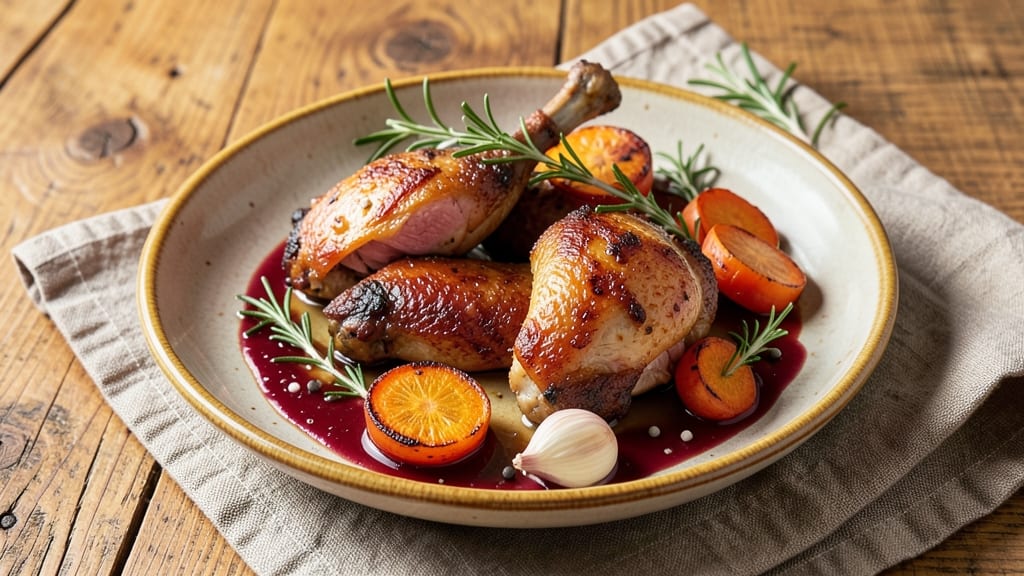
Mastering poached chicken thighs transforms tough cuts into silky, melt-in-your-mouth perfection—this herbed white wine bath recipe is where I perfected the technique after years of testing. The secret lies in precise temperature control and a flavorful liquid that tenderizes while infusing every bite with aromatic depth.
As a chef who grew up in Georgia where every family gathering centered on perfectly cooked poultry, I know how game-changing this method can be for weeknight dinners or special occasions.
This recipe delivers restaurant-quality results with just a few simple ingredients: bone-in chicken thighs, white wine, herbs, and aromatics. The white wine bath not only poaches the chicken gently but also creates a fragrant liquid perfect for finishing sauces or serving alongside the meat.
Unlike dry-heat methods that risk overcooking, poaching ensures juicy, even cooking every time—ideal for those who appreciate tender, flavorful poultry without the guesswork.
The process begins with blanching the chicken to remove impurities, then simmering it in a carefully balanced liquid of white wine, herbs, and vegetables. This method guarantees tender results while developing complex flavors through slow, controlled cooking.
The finished thighs have crisp edges when seared briefly, but remain irresistibly moist inside—a technique I've refined over countless batches in my professional kitchen.
Serve these poached chicken thighs with roasted vegetables, crusty bread, or a light vinaigrette to soak up the herbed poaching liquid. The versatility of this dish makes it perfect for meal prep or last-minute gatherings.
With just 45 minutes of active time and minimal effort, you'll achieve professional-level results that impress even the most discerning guests.
Ingredients for poached chicken thighs
Bone-in thighs and aromatic herbs transform into silky perfection with this herbed white wine bath technique.
| Ingredient | Amount | Notes |
|---|---|---|
| Bone-In Chicken Thighs 🍗 | 1 ½ lb | Skin-on, even thickness preferred |
| Dry White Wine 🍷 | 2 cups | Sauvignon Blanc or Pinot Grigio |
| Fresh Thyme Sprigs 🌿 | 4 whole | Stems removed, leaves only |
| Fresh Rosemary Sprigs 🌿 | 2 whole | Needles only, finely chopped |
| Garlic Cloves 🧄 | 6 cloves | Smashed, skin-on |
| Carrots 🥕 | 2 whole | Medium size, peeled, sliced |
| Celery Stalks 🧅 | 2 whole | Medium size, trimmed, chopped |
| Bay Leaves 🍃 | 2 whole | Dried, standard size |
| White Peppercorns 🌶️ | 1 tsp | Crushed, not ground |
| Salt 🧂 | 1 ½ tsp | Diamond Crystal kosher |
| Unsalted Butter 🧈 | 2 tbsp | Cold, for finishing |
| Extra-Virgin Olive Oil 🫒 | 1 tbsp | For searing |
The chicken thighs should be bone-in and skin-on for optimal flavor and texture—look for evenly sized pieces from the deli counter at Whole Foods or your local butcher. Sauvignon Blanc or Pinot Grigio are ideal for the white wine bath, as their crisp acidity balances the richness of the chicken. If you can't find fresh thyme or rosemary, dried works at half the amount, but fresh is always superior. For the aromatics, buy organic carrots and celery when possible—their vibrant color indicates freshness and better flavor. The garlic should be firm and unspoiled, with no green shoots developing.
No white wine? Substitute chicken broth with a splash of apple cider vinegar for acidity. Fresh herbs unavailable? Dried thyme and rosemary work in a pinch, but reduce to half the quantity. For the carrots and celery, pre-cut vegetable mixes from Trader Joe's save time without sacrificing quality. The bay leaves add depth—never skip them. If you're short on time, pre-chop the vegetables and store them in the fridge for up to 3 days. The white peppercorns should be crushed just before use to release their oils fully.
This poaching liquid can be refrigerated for up to 3 days and reheated gently for sauces or gravies. The finished chicken thighs reheat beautifully—store in an airtight container and consume within 4 days for best texture. For meal prep, portion the thighs and liquid separately to maintain freshness. The butter and olive oil can be stored at room temperature, but use the olive oil within 6 months for peak flavor.
Why You'll Love This Recipe
- No-Fuss Poaching Magic: I toss the chicken thighs, wine, herbs, and garlic into a pot—no marinating, no fuss. The wine infuses flavor while the chicken cooks itself, juicy and tender in under 30 minutes.
- Crave-Worthy Depth: That rosemary and thyme? They cling to the chicken like a hug. The garlic adds a bright, savory punch that makes every bite sing—no dry or bland chicken here.
- Weeknight to Feast: Start with a simple salad and call it dinner. Or double the batch and freeze half for a lazy Monday. It’s the same recipe, just different vibes—casual or impressive.
- Budget’s Best Kept Secret: Bone-in thighs are cheaper than breasts, and wine? I use what’s in the cabinet. Leftovers? Perfect for wraps, grain bowls, or even next week’s lunch—no waste, just flavor.
Step-by-step instructions for poached chicken thighs recipe
This method delivers perfectly tender, herb-infused chicken thighs with minimal effort.
Prepare the Poaching Liquid and Aromatics
In a large Dutch oven or deep skillet, combine the 2 cups dry white wine, 2 whole carrots (sliced), 2 whole celery stalks (chopped), 6 cloves garlic (smashed), 2 whole bay leaves, 1 tsp crushed white peppercorns, and 1.5 tsp salt. Bring to a gentle simmer over medium heat until the vegetables soften slightly—about 5 minutes. This builds flavor into the liquid while preventing bitterness.
Here's where the herbs come into play: Add the 4 whole fresh thyme sprigs and 2 whole fresh rosemary sprigs (finely chopped needles) to the simmering liquid. Let it steep for 2 minutes—this infuses the wine with their aromatic oils. Keep the liquid at a barely simmering state; any vigorous boiling will cloud the wine and make the chicken tough.
Sear the Chicken Thighs for Depth
While the liquid simmers, heat 1 tbsp extra-virgin olive oil in a separate skillet over medium-high heat. Pat the 1.5 lb bone-in chicken thighs dry with paper towels—this ensures a proper sear. Working in batches if needed, sear the thighs skin-side down for 3-4 minutes until the skin is deep golden brown and crispy. Flip and sear the other side for 2 minutes to develop color without overcooking.
This step isn't just about appearance; the Maillard reaction creates complex flavors that the poaching liquid will absorb. Don't crowd the pan—searing too many thighs at once steams them instead of browning. Transfer the seared thighs to a plate and tent with foil to keep warm.
Poach Until Fork-Tender
Carefully add the seared chicken thighs to the simmering herb-infused wine bath. The liquid should come about halfway up the thighs. Return to a gentle simmer (small bubbles at the edges, not a rolling boil) and cover partially with a lid. Poach for 25-30 minutes—the thighs are done when they reach an internal temperature of 165°F and the meat pulls away from the bone with slight resistance.
Check for doneness by inserting a meat thermometer into the thickest part of a thigh. The liquid should reduce slightly, concentrating the flavors. If it simmers too vigorously, reduce the heat immediately—this prevents the chicken from becoming rubbery. The herbs will continue infusing the liquid, creating a fragrant, aromatic bath.
Finish with Butter for Richness
Once the chicken is perfectly tender, remove it from the poaching liquid and transfer to a serving platter. Strain the poaching liquid through a fine-mesh sieve into a small saucepan, pressing on the vegetables and herbs to extract maximum flavor. Return the liquid to medium heat and whisk in the 2 tbsp cold unsalted butter, stirring until melted and emulsified—this creates a silky, glossy sauce.
Pour the herbed butter sauce over the chicken thighs and serve immediately. The butter adds a luxurious finish, balancing the acidity of the white wine and enhancing the herbal notes. Each bite should deliver melt-in-your-mouth tenderness with crispy skin and layers of aromatic depth.
Pro Tips For Making Poached Chicken Thighs
- Smash That Garlic: The recipe calls for smashed garlic cloves, not minced—this keeps the skins intact so they don’t turn bitter in the wine. I used to crush them into a paste, but the skins release tannins that make the broth taste harsh. Just hit them with the flat side of your knife a few times until the flesh softens but stays in chunks.
- Don’t Rush the Thyme Steep: Those 2 minutes of thyme steeping in the wine might feel short, but it’s non-negotiable. I learned this after skipping it once—my chicken tasted flat, like I’d forgotten the herbs entirely. The leaves need time to bloom and release their oils into the liquid, so resist the urge to add them later.
- Watch the Wine Bubbles: A rolling boil ruins everything—this isn’t a pasta pot. You want tiny, lazy bubbles at the edges of the pan, not a violent simmer. I once let mine boil hard for 10 minutes, and the chicken turned out dry and chewy. If the liquid gets too aggressive, drop the heat immediately and let it settle.
- Prep the Rosemary Right: Finely chop those rosemary needles—don’t just tear them. Whole sprigs float and don’t infuse properly, leaving your sauce with just a hint of pine instead of deep, herbal richness. A sharp knife and a few quick chops make all the difference, and you’ll taste it in every bite.
Essential equipment for poached chicken thighs
Dutch Oven Essentials
I swear by my Lodge 7-quart cast iron Dutch oven for this recipe—it's the perfect balance of heat retention and even distribution. The thick enamel coating prevents sticking while allowing me to monitor the poaching liquid without fuss.
If you don't have cast iron, a heavy stainless steel Dutch oven like the All-Clad D5 works just as well. Both options distribute heat evenly, which is critical for maintaining that gentle simmer. 🔥
Precision Thermometer
A good instant-read thermometer is non-negotiable for this technique. I use my Thermoworks Smoke probe thermometer to check both the liquid temperature and the chicken's internal temperature. The 165°F mark is your target for doneness, and this tool ensures you hit it every time. No more guessing—just precision cooking.
Fine-Mesh Sieve
Straining the poaching liquid is where a fine-mesh stainless steel sieve comes into play. I keep a 300-micron mesh one from OXO on hand for this purpose—it catches all the tiny herb bits while letting the liquid flow through smoothly.
This step is what turns your poaching liquid into a luxurious sauce for finishing.
Cast Iron Skillet
For searing the chicken thighs, I reach for my 12-inch Lodge cast iron skillet. The heavy metal holds heat beautifully and develops that perfect golden-brown crust through the Maillard reaction.
If you don't have cast iron, a well-seasoned carbon steel skillet like the Made In models works just as effectively. Just make sure it's properly seasoned first!
Meat Thermometer
Beyond my instant-read thermometer, I also use a probe-style meat thermometer from Meater to monitor the chicken's internal temperature during poaching. This lets me keep an eye on things without disturbing the simmering liquid. It's a game-changer for maintaining that delicate temperature balance throughout the cook.
Nutrition facts
Frequently asked questions
Why sear the chicken thighs before poaching?
Searing creates a crispy, flavorful crust through the Maillard reaction, which the poaching liquid will absorb. This step adds depth to each bite while keeping the inside silky tender. Skipping it means missing out on that delicious contrast!
Can I use bone-less chicken thighs instead?
While bone-in thighs are ideal for flavor and texture, bone-less thighs work too—but they’ll cook faster (15-20 minutes instead of 25-30). Adjust timing carefully to avoid dryness. The skin-on method enhances juiciness, but bone-less still delivers tasty results.
What if my poaching liquid boils too vigorously?
Reduce heat immediately to a gentle simmer—small bubbles at the edges only. Overboiling clouds the wine and toughens the chicken. If needed, remove the lid to cool the liquid faster. Consistency is key for perfect poaching!
How do I reheat leftover poached chicken?
Gently warm the thighs in an airtight container with a splash of water or broth in the oven at 300°F for 10-15 minutes. Avoid microwaving—it dries them out. Serve with reserved poaching liquid for extra moisture!