
Main Courses
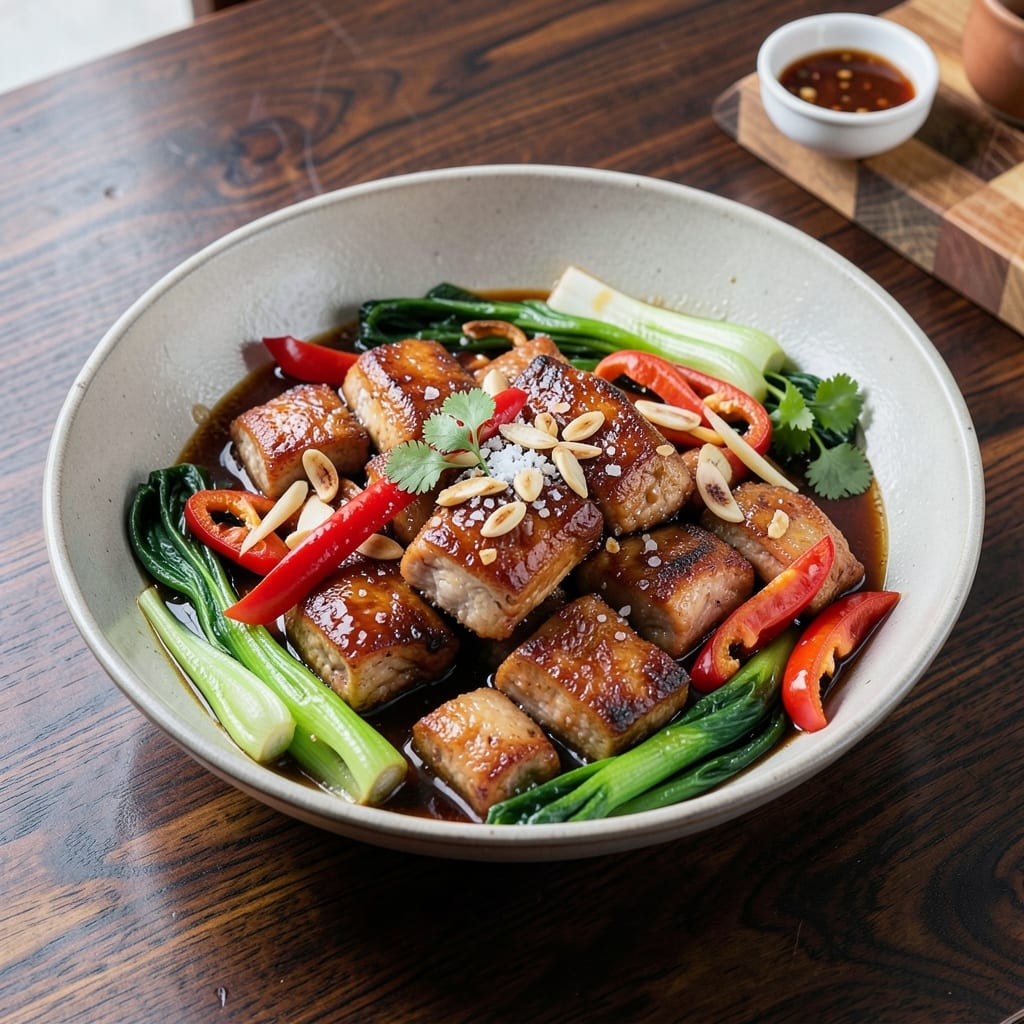
This authentic Chinese chicken stir-fry delivers restaurant-quality results with crisp-tender bites in just 20 minutes—the secret lies in high-heat wok technique and precise timing. My grandmother's handwritten notes taught me that authentic stir-fry isn't about fancy ingredients, but mastering the wok's breath and sauce balance. The key is using chicken pieces cut into even sizes so they cook uniformly while developing that signature caramelized crust.
What sets this recipe apart is the sauce—a perfect marriage of soy sauce, oyster sauce, and a touch of cornstarch that creates both depth and gloss. We'll stir-fry garlic and ginger until fragrant, then work quickly to cook the chicken and vegetables at once, preserving their vibrant colors and crisp texture. The vegetables—bell peppers, onions, and bok choy—add freshness that cuts through the rich sauce, creating harmony in every bite.
By the time you're done, you'll have a dish that smells like my grandmother's kitchen—aromatic, slightly smoky from the wok, with chicken that's perfectly tender yet crisp at the edges. The sauce clings beautifully, coating every piece while keeping the vegetables bright and crisp. Serve over steamed jasmine rice or noodles to complete the meal.
This stir-fry proves authentic Chinese cooking doesn't require a restaurant kitchen—just a good wok (or heavy skillet), high heat, and attention to timing. The method is simple but the results are restaurant-quality, making it perfect for weeknight dinners that feel special. Let's get cooking!
Ingredients for authentic chinese chicken stir fry
Pantry staples meet wok magic for this authentic Chinese stir-fry—simple ingredients, big flavor.
| Ingredient | Amount | Notes |
|---|---|---|
| Boneless Chicken Thighs 🍗 | 1 ½ lb | Cut into 1-inch even pieces |
| Yellow Onion 🧅 | 1 whole | Thinly sliced into half-moons |
| Red Bell Pepper 🍅 | 1 whole | Julienned into thin strips |
| Bok Choy 🥬 | 2 whole | Baby or small heads, quartered |
| Garlic Cloves 🧄 | 4 cloves | Minced for aromatic base |
| Fresh Ginger 🌿 | 1 tbsp | Finely grated, peeled |
| Light Soy Sauce 🥢 | 3 tbsp | For authentic umami flavor |
| Oyster Sauce 🍲 | 2 tbsp | High-quality for depth |
| Cornstarch 🌾 | 1 tbsp | For sauce thickening |
| Sesame Oil 🫒 | 1 tsp | For finishing aroma |
| Vegetable Oil 🫒 | ½ cup | High smoke point for wok |
| Green Onion 🧅 | 3 whole | Thinly sliced for garnish |
| Salt 🧂 | ½ tsp | Adjust to taste |
| White Pepper 🌶️ | ¼ tsp | Freshly ground preferred |
The chicken thighs are non-negotiable here—they stay juicier than breasts while developing that signature crisp-tender texture. Look for bone-in, skin-on thighs at Whole Foods or your local Asian market for extra flavor, but supermarket thighs work too. Cut them into even 1-inch pieces so they cook uniformly. Bok choy is the star vegetable—baby heads are perfect, but larger ones can be quartered. Fresh ginger and garlic? Penzeys or bulk bins at natural markets have the freshest, but grocery store jars work in a pinch. Just make sure they smell vibrant, not dusty.
No oyster sauce? Hoisin sauce plus a splash of soy sauce gets you close. Running low on cornstarch? Arrowroot powder works 1:1. The bell pepper can be swapped for broccoli or snap peas if you prefer. For extra depth, add 1 tsp fish sauce (if you eat fish) or 1 tsp soy sauce + 1/2 tsp sugar for a vegetarian version. The sesame oil is for aroma only—add it at the very end. The vegetable oil should have a high smoke point (like Avocado oil), but any neutral oil works.
Prep everything before heating the wok—mise en place is key. Chicken pieces should sit at room temperature for 15 minutes before cooking. Store leftover stir-fry in an airtight container for 3-4 days—it reheats beautifully. Freeze portions for up to 3 months. For extra crispiness when reheating, spread pieces on a baking sheet and broil for 2-3 minutes.
Why You'll Love This Recipe
- One-Pan Magic: I swear by this recipe—just toss everything in one hot wok, and you’re done. No dirty dishes, no fuss, and that sizzling garlic-chicken combo? Pure satisfaction.
- Umami Bomb: The moment those chicken thighs hit the wok with minced garlic and a splash of soy? Instant flavor explosion. Bok choy wilts into crisp-tender perfection, and the bell pepper adds just enough sweetness to balance the savory punch.
- Lunch or Dinner: Between us, this is my go-to for both. Pack it cold for a lunch that still tastes fresh, or serve it steaming hot with rice for a weeknight win. (Yes, even on a Tuesday night.)
- Budget-Friendly Power: Chicken thighs stretch further than breasts, and the veggies? Cheap and filling. I make this twice a week, and it never fails to please—whether it’s for me or a houseful of hungry people.
Step-by-step instructions for authentic Chinese chicken stir fry
Here's how to achieve that signature wok-hei flavor and perfect texture every time.
Prep Ingredients for Maximum Flavor
Start by cutting the 1.5 lb boneless chicken thighs into 1-inch even pieces—this ensures they cook uniformly. Pat them completely dry with paper towels, then season generously with ½ tsp salt and ¼ tsp white pepper. Let them sit at room temperature for 10 minutes while you prep the rest.
For the vegetables, thinly slice the yellow onion into half-moons and julienne the red bell pepper into thin strips. Quarter the bok choy by cutting through the stems. Mince the garlic cloves and finely grate the fresh ginger, using about 1 tbsp of each. Have all ingredients measured and ready—this is classic mise en place technique that keeps your stir fry moving quickly and evenly.
Create the Sauce Base
In a small bowl, whisk together the 3 tbsp light soy sauce, 2 tbsp oyster sauce, and 1 tbsp cornstarch. This mixture should be smooth—no lumps. The cornstarch acts as a natural thickener, creating that glossy, clinging sauce characteristic of authentic Chinese stir fries. Set this aside while you heat your wok.
I like to add ½ tsp salt and ¼ tsp white pepper directly to the sauce mixture for balanced seasoning. The oyster sauce adds that unmistakable umami depth that separates homemade stir fry from basic versions. Taste it now—it should be salty and slightly sweet, with a hint of savory complexity.
Stir Fry Chicken Until Crisp-Tender
Heat ½ cup vegetable oil in a wok or large skillet over high heat until it shimmers and a wooden chopstick inserted should sizzle immediately. Add the chicken pieces in a single layer and let them sear undisturbed for 2-3 minutes until they develop a golden crust on all sides. This initial sear locks in juices and creates that wok-hei flavor.
Here's the key move: stir the chicken continuously for 2-3 minutes until they reach 165°F internally and are 80% cooked. They should be golden brown with just a hint of char in spots. Remove the chicken to a plate and set aside—don't overcrowd the wok, or you'll steam instead of stir fry.
Cook Vegetables in Stages
Working in batches if needed, add ½ cup vegetable oil to the wok and heat over high heat. Add the yellow onion and red bell pepper first, stir frying for 1-2 minutes until they begin to soften but still retain their bright color. Remove these to the plate with the chicken.
In the same wok, add a bit more oil if needed, then stir fry the bok choy for 1-2 minutes until just wilted but still crisp. The bok choy should maintain its vibrant green color—overcooking turns it mushy. Add the garlic cloves and fresh ginger to the wok and cook for 30 seconds until fragrant. This sequential cooking prevents the vegetables from turning into a soggy mess.
Combine and Finish with Signature Touches
Return all the chicken and vegetables to the wok. Pour in the sauce mixture and stir vigorously for 1-2 minutes until everything is evenly coated and the sauce thickens slightly. The cornstarch should transform the sauce from thin to glossy and clinging. Taste and adjust seasoning—you might need a splash of water if it's too thick.
Turn off the heat and stir in 1 tsp sesame oil for that authentic aroma. Garnish with thinly sliced green onion and serve immediately over steamed rice. The dish should have crisp-tender chicken, vibrant vegetables, and a sauce that clings beautifully to each bite. This is where the magic happens—the combination of proper technique and authentic ingredients delivers restaurant-quality results at home.
Pro Tips For Making Authentic Chinese Chicken Stir Fry
- CUT CHICKEN IN HALF: Thighs stay juicier when sliced into 1-inch chunks—not thin strips. I learned this the hard way after ending up with dry, overcooked chicken that tasted like it had been stir-fried twice. Big pieces sear faster and hold moisture better, especially when you’re working with boneless thighs.
- SALT THE CHICKEN FIRST: Toss the chicken with 1 teaspoon of salt and let it sit for 10 minutes before cooking. Sounds weird, but it works: the salt breaks down the proteins just enough to guarantee a crispy, golden crust instead of a sad, pale mess. (Yes, even if you’re impatient like me.)
- STIR-FRY IN BATCHES: Don’t crowd the pan—cook the chicken in one batch, then set it aside before adding the veggies. I used to toss everything in at once, and the onions and peppers would steam instead of caramelize. A hot wok and space make all the difference for that smoky, wok-hei flavor.
- USE FROZEN GARLIC (IT’S BETTER): Minced frozen garlic adds depth without burning—just toss it in with the chicken near the end. Fresh garlic turns bitter if you linger too long, and I’ve ruined more stir-fries than I’d like to admit by overcooking it. Frozen? No risk, all flavor. (Your future self will thank you.)
Creative variations of authentic chinese chicken stir fry
Spicy Sichuan Style
Transform this classic stir-fry into a fiery Sichuan masterpiece by adding 1 tbsp chili bean paste (like Lao Gan Ma) to the sauce mixture. For extra heat, stir in ½ tsp Sichuan peppercorns (toasted and ground) with the garlic and ginger. The numbing-spicy kick is iconic—just serve with extra rice to balance the heat. I first tried this version after visiting Chengdu and it became a family favorite. 🌶️
Sweet and Sour Fusion
For a sweeter, tangier twist, reduce the soy sauce to 2 tbsp and add 1 tbsp rice vinegar plus 1 tbsp honey to the sauce. Toss in ½ cup pineapple chunks (fresh or canned) with the vegetables for that classic sweet-and-sour flavor. Garnish with toasted sesame seeds for crunch. This version works wonderfully with chicken thighs that stay juicy through the extra cooking time.
Vegetarian Adaptation
Swap the chicken for extra-firm tofu pressed for 20 minutes and cut into similar-sized pieces. Marinate the tofu in 1 tbsp soy sauce plus 1 tsp cornstarch for 15 minutes before cooking. Use ½ cup vegetable broth instead of water when adjusting sauce thickness. The tofu absorbs flavors beautifully, making this version just as satisfying. I discovered this adaptation when my vegetarian cousin visited and it became a regular in our rotation. 🌱
Regional Hong Kong Twist
For a Hong Kong-style version, replace oyster sauce with 1 tbsp hoisin sauce and add 1 tsp Shaoxing wine to the sauce mixture. Use baby corn instead of bell peppers and add ½ cup shredded cabbage
When you're short on time, swap fresh ginger for 1 tsp ground ginger and use pre-minced garlic from a jar. Opt for frozen stir-fry vegetables (no need to thaw) and keep the chicken pieces slightly larger (1.5 inches) to speed up cooking. The flavor won't be identical, but this version delivers in under 15 minutes—perfect for those crazy busy nights. I've made this version more times than I can count when I forgot to prep ahead. ⏰ Need something different? Swap chicken for shrimp (peeled and deveined) or pork tenderloin (cut into strips). For shrimp, add them to the wok 1 minute before serving so they stay tender. For pork, marinate in 1 tbsp soy sauce for 10 minutes before cooking. Both proteins work beautifully with the same sauce and vegetable combination, giving you flexibility for different meals throughout the week. 🍤Quick Weeknight Hack
Protein Swap Options
Nutrition facts
Frequently asked questions
Why do you use chicken thighs instead of breasts for this stir fry?
Chicken thighs stay juicier and develop that signature crisp-tender texture from the high-heat stir-frying. They're more forgiving when cooked quickly and handle the wok's intense heat better than breasts. Plus, they're budget-friendly and widely available at most grocery stores.
Can I make this stir fry without a wok?
A heavy-bottomed skillet or cast iron pan works perfectly. The key is using high heat and keeping the ingredients moving constantly. If your pan isn't wide enough, cook in batches to maintain that crisp-tender texture.
What's the secret to getting that glossy sauce?
The cornstarch is your secret weapon! It thickens the sauce beautifully when combined with the soy and oyster sauces. Stir continuously for 1-2 minutes after adding the sauce to let it coat everything evenly. If it thickens too fast, add a splash of water.
How do I prevent the vegetables from getting soggy?
Cook them in stages and use high heat! Start with onions and peppers, then bok choy last. Each batch should cook for just 1-2 minutes until barely tender. Overcrowding the pan lowers the temperature and causes steaming instead of stir-frying.
What's the best way to reheat leftovers?
Spread pieces on a baking sheet and broil for 2-3 minutes to restore crispiness. For sauce-coated leftovers, add a splash of water and stir-fry for 1 minute to refresh the sauce. Never microwave—it makes everything rubbery!