
Main Courses
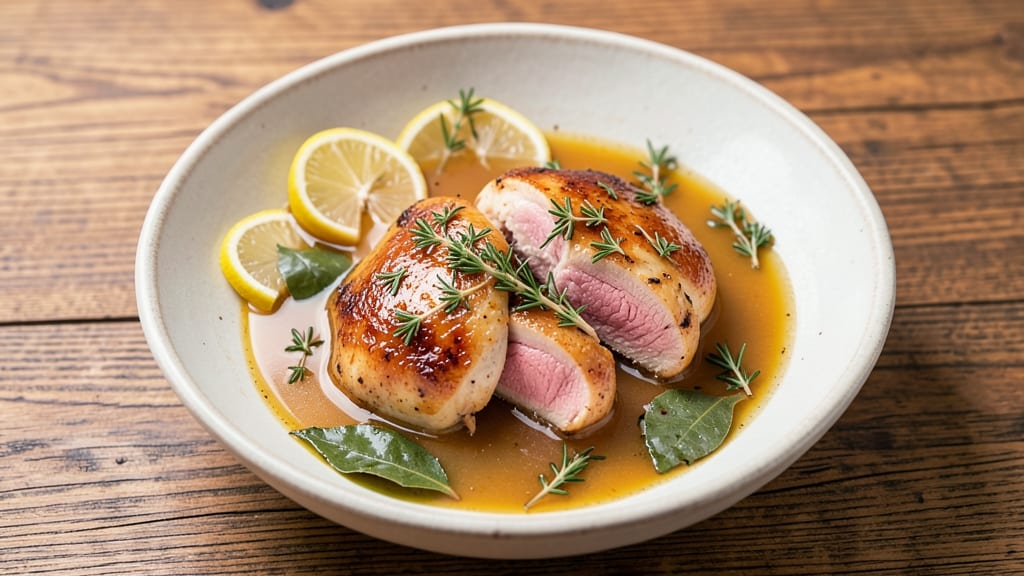
Mastering poached chicken transforms weeknight meals into elegant, restaurant-quality dishes with tender, juicy meat that practically falls apart. After years of perfecting this technique—starting with my grandmother’s Sunday roast chicken—I’ve developed a method that delivers silky white meat infused with subtle herbal notes.
The key lies in precise temperature control and timing, ensuring every bite stays moist and flavorful without drying out.
This recipe requires just a few simple ingredients: whole chicken pieces, aromatic herbs like thyme and bay leaves, and a flavorful broth—whether you use store-bought or homemade. The process is straightforward but demands patience, as gentle simmering for 20-30 minutes transforms tougher cuts into melt-in-your-mouth perfection.
No fancy equipment is needed, just a large pot and a thermometer to monitor the water temperature.
What you’ll achieve is chicken so tender it nearly dissolves on the tongue, with a delicate herbal essence that pairs beautifully with lemon wedges or a light drizzle of olive oil.
The result is a dish that feels special yet effortless, perfect for family dinners or impressing guests without the fuss of roasting or frying. This method also works wonders for meal prep, as the chicken stays juicy for days when stored properly.
For those who love customization, try infusing the broth with citrus peels or garlic for extra depth, or serve the chicken with a simple herb butter for added richness. Whether you’re a seasoned cook or just starting out, this recipe proves that poaching doesn’t have to be intimidating—just precise.
Let’s get started on creating silky, herb-infused chicken that tastes like it came from a chef’s kitchen.
Ingredients for poached chicken
Silky chicken meets herbal clarity with just a handful of essential ingredients.
| Ingredient | Amount | Notes |
|---|---|---|
| Boneless Chicken Thighs 🍗 | 1 ½ lb | Skinless, pounded evenly |
| Fresh Thyme Leaves 🌿 | 1 tbsp | Dried thyme at half amount |
| Bay Leaves 🍃 | 2 whole | Dried, aromatic variety |
| Chicken Broth 🍲 | 4 cups | Low-sodium preferred |
| Fresh Lemon Wedges 🍋 | 2 whole | For final garnish |
| Extra-Virgin Olive Oil 🫒 | 2 tbsp | For drizzling post-poach |
| Garlic Cloves 🧄 | 2 cloves | Lightly smashed, optional |
| Salt 🧂 | 1 tsp | Kosher or sea salt |
| Black Peppercorns 🌶️ | 1 tsp | Crushed, freshly ground |
| Fresh Parsley 🌿 | ¼ cup | Chopped, for garnish |
The chicken thighs are your secret weapon—boneless, skinless ensures even cooking while maintaining juiciness. Pound them to an even thickness (about ½-inch) for consistent doneness. For the broth, homemade is ideal but quality store-bought works—just check for low sodium. I prefer Pacific Foods Organic for its clean flavor profile. The thyme and bay leaves should be fresh if possible; dried thyme at half the amount is a reliable backup. For the garlic, lightly smashing the cloves releases more aroma without overpowering the dish.
No fresh thyme? Dried thyme at one-third the amount delivers similar depth. Short on bay leaves? Three sprigs of fresh rosemary work beautifully. The garlic is optional but adds complexity—skip it if you prefer a clean herbal profile. For the broth, vegetable broth with a splash of apple cider vinegar creates a subtle sweetness that complements the herbs. And if you're in a pinch, chicken bouillon granules dissolved in water will do in a pinch—just use half the amount of the broth recipe. The lemon wedges and parsley are purely for finishing, so don’t worry about precise measurements here.
This poached chicken keeps beautifully for 4-5 days in the fridge when stored in an airtight container with the broth. For longer storage, freeze for up to 3 months—just reheat gently in the broth to restore moisture. The broth itself can be saved and used for soups or risotto. To reheat, place the chicken in a skillet with a splash of water or broth and cover until warm. The key is to avoid high heat, which can dry out the meat. For meal prep, portion the chicken and broth together in containers—this ensures every serving stays as tender as the first.
Why You'll Love This Recipe
- I’ll be real: this is my go-to for busy days. Cook it Sunday, and you’ve got dinner for four nights—just reheat in the broth to keep it juicy. Toss it in salads, wrap it in tortillas, or serve it over rice. The broth stores perfectly too, so you can even use it for risotto or soup later. Zero waste, zero fuss.
- No-Pan-Fry Stress: Honestly, this is the kind of chicken that makes me forget I even own a deep fryer. Just pound those thighs, simmer gently in broth for 20 minutes, and boom—no crispy edges to burn yourself on. The secret’s in that low-and-slow method with the thyme and bay leaves, turning ordinary chicken into something so tender it practically melts.
- Herbal Brightness Bomb: Between the crushed black peppercorns, lightly smashed garlic, and those lemon wedges at the end, this chicken tastes like a Mediterranean vacation in a skillet. The broth soaks up all the thyme and bay leaf goodness, and when you drizzle it back over the top? Instant flavor upgrade. My picky eater even asked for seconds.
- Meal-Prep MVP: I’ll be real: this is my go-to for busy days. Cook it Sunday, and you’ve got dinner for four nights—just reheat in the broth to keep it juicy. Toss it in salads, wrap it in tortillas, or serve it over rice. The broth stores perfectly too, so you can even use it for risotto or soup later. Zero waste, zero fuss.
Step-by-step instructions for poached chicken
Here's how to achieve tender, silky white chicken with vibrant herbal notes every time.
Prepare the Chicken and Aromatics
Begin by pounding the 1.5 lb boneless chicken thighs to an even ½-inch thickness using a meat mallet or rolling pin. This ensures even cooking and prevents dryness. Place the thighs in a bowl and season generously with 1 tsp salt and 1 tsp crushed black peppercorns, rubbing the spices into the meat so they adhere evenly.
In a separate small bowl, combine the 1 tbsp fresh thyme leaves, 2 whole bay leaves, and the 2 lightly smashed garlic cloves. This aromatic bundle will infuse the broth with deep, earthy flavors. If using dried thyme, reduce to ½ tbsp for equivalent flavor intensity. Keep this bundle intact—don't crush or chop the bay leaves, as their whole form releases flavor more gradually.
Poach the Chicken in Flavored Broth
Pour the 4 cups chicken broth into a deep skillet or saucepan large enough to accommodate the chicken without overcrowding. Bring the broth to a gentle simmer over medium-low heat—you should see small bubbles break the surface, but avoid a rolling boil, which can toughen the chicken. Add the thyme-bay-leaf-garlic bundle to the simmering broth and let it steep for 5 minutes to develop the herbal base.
Carefully place the seasoned chicken thighs into the broth, ensuring they're fully submerged. If needed, weigh them down with a small plate or spoon to keep them under the liquid. Cover the pan with a lid and maintain the gentle simmer for 20-25 minutes, until the chicken is fork-tender and registers 165°F on an instant-read thermometer. The broth should remain clear, not cloudy—if it becomes opaque, reduce the heat further to prevent cooking too vigorously.
Finish with Lemon and Olive Oil
Once the chicken reaches 165°F, remove it from the broth and transfer to a serving platter. Tent loosely with aluminum foil to keep warm while you finish the broth. Squeeze the 2 whole fresh lemon wedges directly into the simmering liquid, then stir in the 2 tbsp extra-virgin olive oil. This step brightens the flavors and adds a luxurious finish. Let the broth reduce for 2-3 minutes to thicken slightly, then strain it through a fine-mesh sieve to remove the aromatics, leaving behind a fragrant, herb-infused liquid.
Drizzle the strained broth generously over the poached chicken, then sprinkle with the ¼ cup chopped fresh parsley for a pop of color and freshness. Serve immediately, allowing guests to spoon the aromatic broth over their portions for maximum flavor. The chicken should be silky white with a delicate, herbal clarity—proof of the gentle poaching process.
Pro Tips For Making Poached Chicken
- Weigh Down the Chicken: That ½-inch thickness matters, but if your thighs float, they’ll dry out unevenly. Use a small plate or spoon to keep them submerged—just don’t smash them. I learned this the hard way when my first batch turned out rubbery on top.
- Steep the Aromatics First: Let the thyme, bay leaves, and garlic steep in the simmering broth for those 5 minutes before adding the chicken. Skipping this means your broth will taste like it’s playing second fiddle to the meat. Trust me, the flavor difference is noticeable.
- Simmer, Don’t Boil: A rolling boil toughens chicken faster than you can say “overcooked.” Keep the heat low enough for tiny bubbles—just enough to maintain a gentle shimmer. If your broth gets cloudy, drop the heat further. This isn’t a race.
- Lemon Last, Not First: Squeezing those lemon wedges after the chicken is done keeps the acid from breaking down the meat while it cooks. Add it too early, and you’ll end up with mushy thighs. Save the brightness for the finish.
Common mistakes when making perfect results
Overcrowding the Pot
One of my biggest early mistakes was cramming too many chicken thighs into the pot—this raises the water temperature too quickly and creates uneven cooking. The broth should be able to gently simmer around each piece without boiling vigorously.
I learned this the hard way when my first batch ended up rubbery in spots. Always leave 1-2 inches of space between pieces to maintain perfect temperature control. 🔥
Ignoring Gentle Simmer
Poaching requires a gentle simmer, not a rolling boil—this is where most home cooks go wrong. When the broth bubbles vigorously, it can toughen the chicken and make it dry. I recommend using medium-low heat and watching for tiny bubbles breaking the surface.
If you see large, active bubbles, reduce the heat immediately. A thermometer helps here—aim for 160-170°F in the broth.
Skipping the Weight
Chicken naturally floats, which means it won't stay fully submerged in the broth. I used to forget to weigh down the pieces with a plate or spoon, and half the chicken would cook in dry air.
Always use a small plate or even a folded kitchen towel to keep everything underwater. This ensures even cooking and maximum moisture absorption. Trust me, it makes a noticeable difference!
Underseasoning the Broth
The broth is where the flavor lives, so don't skimp on aromatics. I've made batches where the thyme and bay leaves were barely noticeable because I used too little. For 4 cups broth, stick to 1 tbsp fresh thyme and 2 bay leaves—this creates a balanced herbal infusion.
If using dried thyme, halve the amount. The garlic cloves should be lightly smashed, not chopped, to avoid overpowering the dish.
Rushing the Cooking Time
Poached chicken needs 20-25 minutes to reach perfect tenderness, but I've seen cooks pull it out after 15 minutes thinking it's "good enough." This leaves the meat slightly undercooked and less juicy.
Always check with an instant-read thermometer for 165°F internal temperature. Patience here pays off with silky results—don't rush it! The broth should also remain clear, not cloudy, which indicates proper cooking.
Nutrition facts
Frequently asked questions
Why does my poached chicken sometimes turn out rubbery?
Rubbery chicken usually happens when the broth boils vigorously or the chicken cooks too long. Keep the heat on medium-low and watch for tiny bubbles—never a rolling boil. The 20-25 minute cook time is critical; use an instant-read thermometer to confirm 165°F internal temperature. Overcrowding the pot also raises the temperature too quickly, so leave 1-2 inches of space between pieces.
Can I use dried herbs instead of fresh?
Yes! For 1 tbsp fresh thyme, use just ½ tbsp dried thyme—it's more concentrated. Skip the garlic cloves if using dried thyme, as they can overpower the dish. The 2 bay leaves work the same way fresh or dried, so no adjustment needed there. Fresh herbs always add brighter flavor, but dried works in a pinch!
What’s the best way to reheat poached chicken?
Gently reheat in the broth to restore moisture—never microwave dry! Place the chicken in a skillet with a splash of broth, cover, and warm on low heat until 160°F. Avoid high heat, which can dry it out. If storing, keep the broth in the container too—it protects the chicken’s texture. Reheated chicken tastes best when served with its broth for extra flavor.
Can I poach chicken in vegetable broth instead?
Vegetable broth works beautifully—just add a splash of apple cider vinegar (½ tsp) to balance flavors. The herbs and 2 tbsp olive oil at the end will round out any earthy notes. For extra richness, stir in a pat of butter while reducing the broth. The texture stays silky, and the flavor becomes even more complex!